Ultimate Guide to Post-Purchase Experience Design
Practical strategies to improve post-purchase experience for Australian eCommerce: delivery transparency, unboxing, easy returns, proactive support and feedback.
27 January 2026
- Beyond Checkout: Designing a Post-Purchase Experience That Sticks
- Mapping the Post-Purchase Customer Journey
- Creating a Better Unboxing and First-Use Experience
- Setting Up Customer Support and Feedback Systems
- Tracking Performance and Improving Over Time
- Implementation Guide for Australian Brands
- FAQs
- Related Blog Posts
The way you manage your post-purchase experience can make or break your business. Why? Because retaining customers is far cheaper than acquiring new ones. In fact, keeping a customer happy can boost profits by up to 95%. Here’s the deal: Australians expect more after they click "buy". From clear delivery updates to hassle-free returns, these moments define whether they'll shop with you again.
Key takeaways:
- Retention matters: A 5% increase in retention can grow profits by 25–95%.
- Delivery transparency is king: 93% of online shoppers expect regular updates.
- Returns are critical: 51% won’t return if the process is difficult.
- Unboxing matters: 90% of consumers say packaging reflects product quality.
- Support drives loyalty: 85% of Aussies will leave after one poor interaction.
Whether it’s eco-friendly packaging or proactive communication, a well-executed post-purchase strategy isn’t just good service - it’s your competitive edge in Australia’s eCommerce landscape.
Beyond Checkout: Designing a Post-Purchase Experience That Sticks
Mapping the Post-Purchase Customer Journey
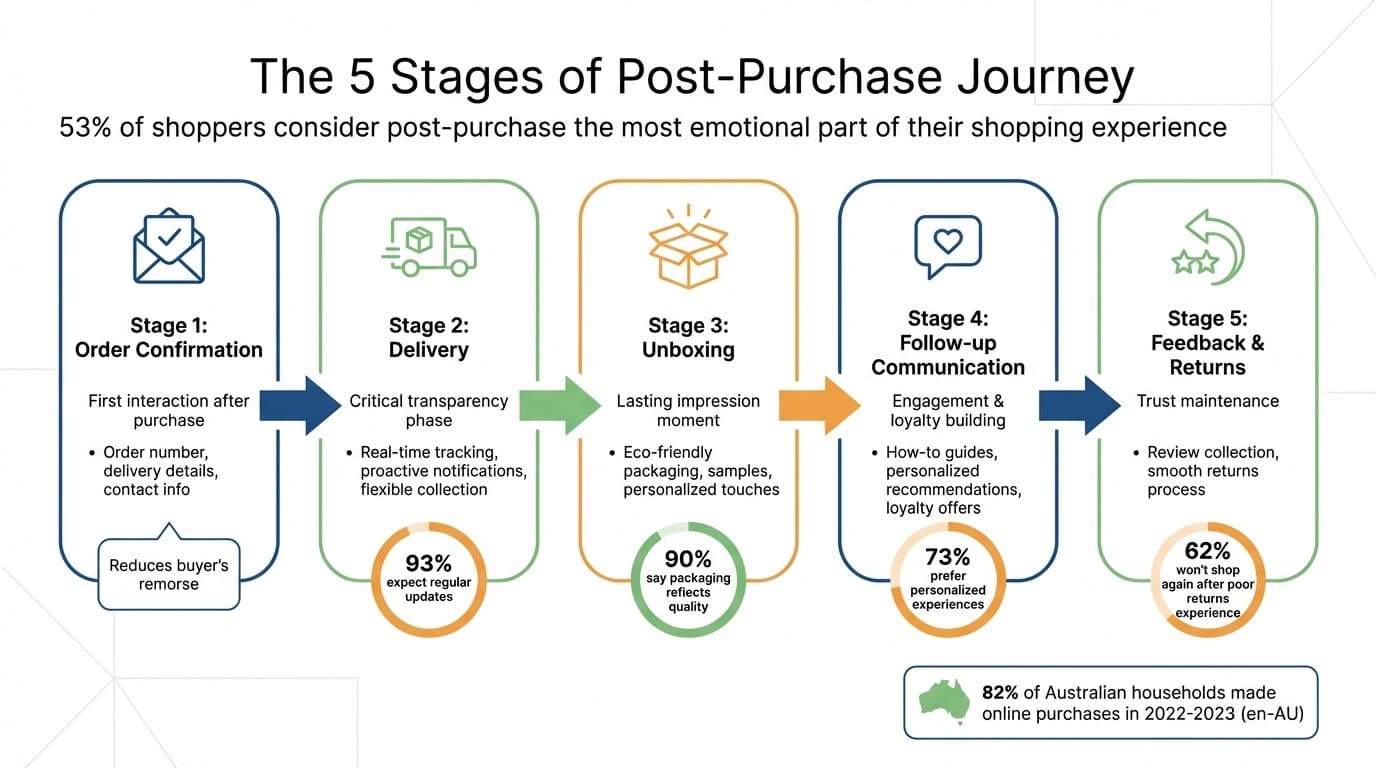
5 Stages of Post-Purchase Customer Journey in eCommerce
Every touchpoint after a purchase, from order confirmation to feedback, plays a role in building customer loyalty. These moments are crucial because 53% of shoppers consider the post-purchase phase the most emotional part of their shopping experience. Handling this journey with care can prevent friction and strengthen trust. Let’s break down the key stages of this journey.
The 5 Stages of Post-Purchase
The post-purchase journey consists of five stages, each influencing customer satisfaction in its own way:
Order Confirmation
This is the first interaction after a purchase, reassuring customers and reducing buyer’s remorse. A confirmation email or SMS should include the order number, delivery details, and contact information. While purely transactional, it sets the tone for future interactions.
Delivery
Delivery is a critical phase for Australian shoppers, who expect transparency and regular updates. Real-time tracking, proactive notifications through SMS or email, and flexible collection options like 24/7 Parcel Lockers are now standard. Fast and efficient multi-channel support also helps resolve inquiries quickly, boosting service quality.
Unboxing
This moment is an opportunity to leave a lasting impression. Eco-friendly packaging and thoughtful touches like samples, handwritten notes, or QR codes can elevate the experience. Australians are increasingly focused on sustainability, so right-sized, recyclable packaging is a must.
Follow-up Communication
This stage involves sending how-to guides, personalised recommendations, and loyalty offers. Personalisation matters here - 73% of customers prefer brands that make shopping experiences more relevant using personal information. Tailored communication can significantly enhance engagement and build loyalty.
Feedback & Returns
Collecting reviews and managing returns efficiently is vital for maintaining trust. A smooth returns process is especially important, as 62% of customers are unlikely to shop again after a poor returns experience. Flawless handling of this stage ensures that even when products fall short, trust in your brand remains intact.
Adapting the Journey for Australian Customers
The Australian market presents unique challenges that require attention to detail, especially in delivery and returns. With 82% of Australian households (9.4 million) making online purchases in the 2022–2023 financial year, there’s plenty of opportunity - but also risk. For instance, 65% of shoppers abandon carts if shipping costs are too high, and 44% abandon if delivery takes too long. Setting realistic delivery expectations is key.
For apparel, aim for delivery within 3–5 days; for larger electronics, 5+ days is acceptable. Interestingly, 47% of Australian shoppers are willing to pay an extra AU$20 for same-day or sub-three-hour delivery, but most prioritise reliability over speed. Booktopia, for example, found that accurate delivery timeframes matter more to Australian customers than same-day delivery.
Branded tracking pages can also enhance trust. Instead of redirecting customers to carrier sites, keep them engaged with your brand while they track their orders. Promote tools like the AusPost app, which offers two-hour delivery windows and can reduce customer service inquiries by 35%. Additionally, 73% of shoppers want to know their parcel collection options, such as PO Boxes or 24/7 Parcel Lockers, before completing a purchase.
Returns are another critical aspect of the post-purchase experience. In 2023, 25% of Australian customers returned an online purchase, and 75% now expect free returns. Under Australian Consumer Law, customers are entitled to refunds, repairs, or replacements for faulty goods, so your returns policy must be clear and easy to navigate. To manage feedback effectively, only request reviews after successful, on-time deliveries, and use personal outreach to resolve issues with delayed orders.
Creating a Better Unboxing and First-Use Experience
The unboxing moment is more than just opening a package - it's a defining interaction that solidifies customer trust and leaves a lasting impression of your brand. It builds on earlier stages like delivery and order confirmation, rounding out the post-purchase experience. In fact, 90% of consumers believe the post-purchase experience is just as important as the product's quality, while 63% say packaging holds the same weight as the brand itself. It's clear: packaging isn't just about protection; it's a reflection of your brand's identity.
Packaging Design and Materials
Think of your packaging as your brand's "visual handshake". Whether you're going for a luxurious feel, an eco-conscious vibe, or a sleek minimalist look, the design should speak to your brand's essence the moment the box is opened. Adding layers like branded tissue paper, custom tape, or stickers can elevate the experience. Notably, 45% of consumers associate "gift-like" packaging with a more premium brand.
For Australian shoppers, sustainability is a priority. 74% of consumers are willing to pay extra for eco-friendly packaging, and three out of four Australians consider sustainability when shopping online. Using recyclable, compostable, or biodegradable materials - such as corrugated cardboard, bamboo, or cornstarch-based mailers - meets these expectations. Additionally, "best-fit" packaging not only reduces waste but also protects the product during transit. Oversized boxes, on the other hand, can come across as careless.
For brands on a budget, small personalised touches like branded stickers or custom tissue paper can make a big difference without breaking the bank. Practicality is also key. Follow Australia Post guidelines by using matte, machine-readable labels and ensuring packaging sizes align with regulatory limits.
Once you’ve nailed the design and materials, it's time to personalise the experience to meet customer expectations.
Meeting Australian Customer Expectations
Packaging isn't just about looks; it’s about creating a connection. Personalisation can help build emotional ties and reduce post-purchase doubts, reinforcing the trust you’ve worked hard to earn. Simple touches like handwritten thank-you notes, using the customer’s name, or including small surprises such as free samples or discount codes can make a big impact. In fact, 73% of customers prefer brands that use personal information to create more relevant experiences.
Australian consumers also value straightforward and friendly communication. Packaging inserts with authentic, conversational copy can help reinforce your brand voice. For example, Who Gives A Crap uses playful packaging and includes reorder reminders, turning a routine purchase into a memorable experience.
The first-use experience matters too. Include clear instructions, care tips, or assembly guides directly in the packaging to ensure customers can enjoy your product right away. QR codes linking to setup videos or FAQ pages are another great way to provide instant help. For an even more engaging touch, consider integrating AR elements to create an interactive experience. These efforts not only enhance satisfaction but also reduce the likelihood of returns.
And speaking of returns, your packaging should make the process hassle-free. Including a second adhesive strip allows customers to reuse the original box if they need to send something back. With 26% of Australian shoppers making a return in the past year, and 47% of those returns due to poor fit, clear return instructions and reusable packaging show that you’ve thought through the entire customer journey. This attention to detail strengthens trust and encourages repeat business.
Setting Up Customer Support and Feedback Systems
A memorable unboxing experience is just the start - strong customer support ensures the post-purchase journey continues smoothly. Resolving issues promptly and gathering feedback are key to retaining customers. In Australia, where consumers quickly switch brands after a bad experience, 85% of customers stop doing business with a company after just one poor interaction. On the flip side, 7 in 10 shoppers are willing to spend 17% more with a business that consistently delivers excellent service.
Multi-Channel Support Options
Australian consumers are no strangers to using multiple channels for customer support. In fact, 66% use at least three different channels to reach out for help. Here's how you can meet their expectations:
- Email: Perfect for non-urgent issues, offering a reliable way to handle detailed queries.
- Live Chat: Ideal for real-time assistance, especially during browsing or checkout, where quick help can prevent cart abandonment.
- Phone Support: Essential for direct, personal conversations, which many customers still value.
To streamline all these interactions, consider using omnichannel tools like Gorgias or Zendesk. These platforms bring together inquiries from email, social media, and chat into one dashboard. This setup gives your team access to customer purchase history and shipping details, avoiding the frustration of customers repeating themselves. Integrating your support system with tools like your Warehouse Management System (WMS) or 3PL platform adds another layer of transparency. With real-time stock and delivery updates, your agents can provide proactive, informed responses - something Australian customers value, given the challenges of long distances and regional logistics.
Self-service options are also a must. A well-organised FAQ or help centre can handle repetitive questions about billing, returns, or shipping policies, acting as the first point of contact for many customers.
"Following up a sincere apology with next steps is key to navigating tough interactions empathetically... it shifts the focus and tone of the conversation back towards addressing the problem at hand".
By integrating these support channels, you not only resolve issues faster but also create opportunities for ongoing improvement through customer feedback.
Collecting and Using Customer Feedback
Once your support systems are in place, the next step is gathering feedback to refine your processes. Feedback isn't just about gauging satisfaction - it's a tool for identifying patterns and making meaningful changes. One effective approach is to send surveys 24–48 hours after delivery, capturing customers' immediate impressions. Keep these surveys short and mobile-friendly - 67% of customers abandon long surveys, and 20% may stop engaging with a brand due to poorly designed ones. Aim for surveys with fewer than 10 questions, and display one question per screen to suit the 6 in 10 surveys now completed on mobile devices.
Use a mix of structured metrics and open-ended feedback to get a full picture:
- Customer Satisfaction (CSAT): Measures immediate reactions to your service.
- Net Promoter Score (NPS): Tracks long-term loyalty.
- Customer Effort Score (CES): Identifies friction in processes like returns or support interactions.
For unstructured feedback, monitor social media mentions, reviews, and chat transcripts. You can also embed feedback widgets into branded tracking pages or include QR codes on physical receipts to capture insights from offline purchases. For Australian retailers using Shopify POS, adding QR codes to receipts that link directly to mobile-friendly surveys can be especially effective.
The key is to act on the feedback you receive. A "You said, we did" approach shows customers that their input leads to real changes.
"Taking concrete actions based on the feedback is what brings value to both the brand and the customers".
To make sense of open-text feedback, leverage AI tools for sentiment analysis. These tools can group responses by themes, helping you spot recurring issues and prioritise fixes. By treating feedback as a tool for growth rather than a checkbox, you turn customer insights into a powerful driver for improvement.
Tracking Performance and Improving Over Time
Once you've fine-tuned every post-purchase interaction, the next step is to keep tabs on how well everything is working. Tracking performance is what ensures you're always improving. It’s also the key to meeting - and exceeding - customer expectations. Did you know that 90% of consumers view the post-purchase experience as equally important as the product itself? Yet, only 1% feel businesses consistently deliver on those expectations. By monitoring the right metrics, you can close this gap and turn occasional buyers into loyal customers.
Metrics to Monitor
Certain metrics shine a spotlight on how your operations and customer sentiment stack up. For logistical performance, keep an eye on Order Accuracy Rate and On-time Delivery. These reveal how well you're fulfilling orders. On the customer support side, track First Contact Resolution (FCR) and the volume of "Where is my order?" (WISMO) queries. A spike in WISMO queries usually means customers aren’t getting enough updates about their orders - something 83% of consumers expect.
For customer sentiment, tools like Net Promoter Score (NPS), Customer Satisfaction (CSAT), and Customer Effort Score (CES) are invaluable. NPS tells you about long-term loyalty, CSAT measures immediate satisfaction, and CES highlights how easy (or hard) it was for customers to resolve an issue. High effort? That’s a red flag for potential churn. Also, don’t overlook your Returns Rate. With returns averaging 20–30%, digging into the reasons behind them - like mismatched product descriptions or quality concerns - can uncover areas to improve.
| Metric | What It Measures | Why It Matters |
|---|---|---|
| Order Accuracy Rate | Percentage of orders fulfilled correctly | Mistakes erode trust; 86% of customers leave after just two bad experiences |
| WISMO Query Volume | Number of "Where is my order?" queries | High numbers suggest poor communication |
| First Contact Resolution | Issues resolved in one interaction | Faster resolutions mean happier customers |
| Customer Effort Score (CES) | Ease of issue resolution | High effort often predicts churn |
| Returns Rate | Percentage of orders returned | Highlights product or description problems |
Timely feedback collection is another piece of the puzzle. Send CSAT surveys right after delivery while the experience is still fresh, but delay product-specific feedback until customers have had time to use the item. Tools like Qualtrics XM or Okendo can automate these surveys, capturing both numbers and open-ended comments.
Testing and Refining Your Approach
The metrics you track should drive meaningful action. Use them to experiment and refine your approach. For instance, A/B test email timing, subject lines, and content to see what resonates most with customers. Try sending how-to guides or setup videos a day or two after delivery, when customers are most likely to engage. Even your thank you page - visited by 100% of your customers - is a goldmine for testing. Whether it’s upselling subscriptions or sharing behind-the-scenes team stories, this page can do more than just say "thanks".
To truly understand your post-purchase journey, place test orders yourself. Pay attention to every detail - from confirmation emails to tracking updates and even the unboxing experience. This hands-on approach can reveal gaps in communication or operations. Also, be strategic with review requests: avoid sending automated reminders for delayed orders, and consider personal outreach, like a phone call, to turn a potential complaint into a positive experience. If a customer repeatedly checks their tracking page, a proactive "Need help?" prompt can make all the difference.
Here’s something to keep in mind: a well-handled problem can actually boost loyalty. This is known as the service recovery paradox. In fact, 89% of customers say they’re more likely to make another purchase after a positive post-purchase experience. By continuously testing and refining your strategy, you’re not just improving customer satisfaction - you’re directly impacting your bottom line.
Implementation Guide for Australian Brands
It’s time to turn these strategies into action. A thorough, step-by-step audit can deliver lasting improvements without requiring a complete overhaul of your operations. By building on earlier insights, you can create a smooth and engaging post-purchase experience for your customers.
Steps to Get Started
Start by mapping out your current post-purchase journey. Place a test order and track every touchpoint along the way - from confirmation emails to returns. Document where customers might feel confused or frustrated. Are your tracking updates easy to follow? Does your packaging reflect your brand’s identity? How many steps are needed to initiate a return? This hands-on approach will help you uncover issues that might not stand out on paper.
Next, dive into your customer data. Reviews, live chat transcripts, social media comments, and survey results can all highlight recurring pain points, like unclear return policies or delays in shipping. As previously discussed, benchmarking is key. Use metrics like NPS, CSAT, order accuracy, and on-time delivery to establish a baseline and track the impact of your changes.
Address problem areas one at a time with targeted solutions. For example, if customers frequently ask, "Where is my order?", consider adding automated SMS or email tracking updates. If your returns process feels cumbersome, introduce a self-service portal with pre-paid labels. Test these changes with a small segment of your audience before rolling them out widely. For instance, in October 2024, beauty brand Dermalogica moved to Shopify, resulting in a 44% boost in site speed, a 14% drop in bounce rate, and a staggering 119% increase in sales, along with a 45% improvement in conversion rates.
Once your internal processes are fine-tuned, you might want to explore external expertise to accelerate your growth further.
Working with Growth Consultants
While some brands manage these improvements internally, others benefit from outside help, especially when resources are stretched. If your eCommerce business generates annual revenue between $1 million and $10 million, partnering with a growth consultancy like Uncommon Insights could be a game-changer. Based in Sydney, Uncommon Insights focuses on creating tailored strategies for FMCG and eCommerce companies, offering services such as growth audits, customer alignment roadmaps, and retention strategy frameworks designed specifically for the Australian market.
Consultants bring in-depth market knowledge and proven methods to help prioritise changes that drive measurable results. Whether you need assistance auditing your current processes, refining your post-purchase journey, or introducing incrementality testing, a consultancy can offer hands-on support and actionable insights. The right partner will collaborate with your team to develop scalable solutions that fit your business needs.
FAQs
What are the best ways to enhance post-purchase communication with customers?
To strengthen post-purchase communication, businesses should prioritise timely, personalised, and transparent interactions. Begin by sending prompt order confirmations and providing regular updates on delivery status. This helps set clear expectations and builds trust with your customers. Keeping communication proactive and straightforward can also ease any concerns and create a more positive buying experience.
Automation tools can play a key role here. Use them to send personalised follow-ups, ask for feedback, or share exclusive offers that encourage repeat purchases. Introducing feedback opportunities, like surveys or reviews, not only shows customers that their opinions are valued but also gives you actionable insights to refine your products or services. When done right, a thoughtful communication strategy can greatly enhance customer satisfaction and loyalty.
How does packaging influence customer loyalty?
Packaging is more than just a protective layer; it’s a powerful tool for building customer loyalty. A well-thought-out unboxing experience - complete with premium materials, personalised touches, or eye-catching designs - can turn a simple delivery into something special. This attention to detail makes customers feel appreciated, evoking the excitement of unwrapping a gift. That emotional connection often leads to repeat purchases and a stronger bond with the brand.
In Australia’s bustling eCommerce landscape, where delivery and returns heavily influence customer satisfaction, packaging also carries a practical responsibility. Sturdy, functional designs help prevent damage during shipping, ensuring products arrive in perfect condition. At the same time, visually appealing packaging leaves a lasting impression. A memorable unboxing moment doesn’t just make customers happy - it often prompts them to share their experience on social media, amplifying brand awareness. By blending practicality with creativity in their packaging, businesses can retain customers and carve out a distinctive presence in a competitive market.
Why is a smooth returns process important for building customer loyalty?
The way a business handles returns can significantly influence customer loyalty, shaping how people feel about your brand overall. A smooth, straightforward returns process builds trust, increasing the chances that customers will return to shop with you. For Australian businesses, offering clear and flexible return options - like free returns - can make you stand out in the crowded eCommerce landscape.
Managing returns effectively doesn’t just ease customer frustrations; it can transform a potentially negative experience into a chance to strengthen relationships. Showing care and dependability during the returns process can lead to repeat purchases and glowing recommendations, helping to build long-term loyalty. This is especially crucial for younger shoppers, who are more likely to make returns and often evaluate brands based on how well returns are handled.
Related Blog Posts
How to Map DTC Customer Touchpoints
Create Your Customers: A Proven Framework
Ultimate Guide to Emotional Drivers in eCommerce
eCommerce Return Rates by Channel 2025
7 Ways To Use NPS For Growth
Complete Guide to eCommerce Growth
Newsletter
The Uncommon Insights Letter
Practical FMCG & eCommerce growth playbooks — margins, retention and scaling tactics, straight to your inbox.
Turn these ideas into profit you can see
Get a hands-on operator to turn the frameworks above into results — book a free audit call.