You're Treating Holiday Shoppers as One-Time Buyers - Here's How to Retain Them
The holiday season brings a flood of new customers. Black Friday. Cyber Monday. Christmas shopping. Your customer count surges.
Then January arrives. Those new customers vanish.
64% of brands see lower retention from holiday customers. Nearly two-thirds of holiday customers are lower quality than...
7 min read · 14 August 2025
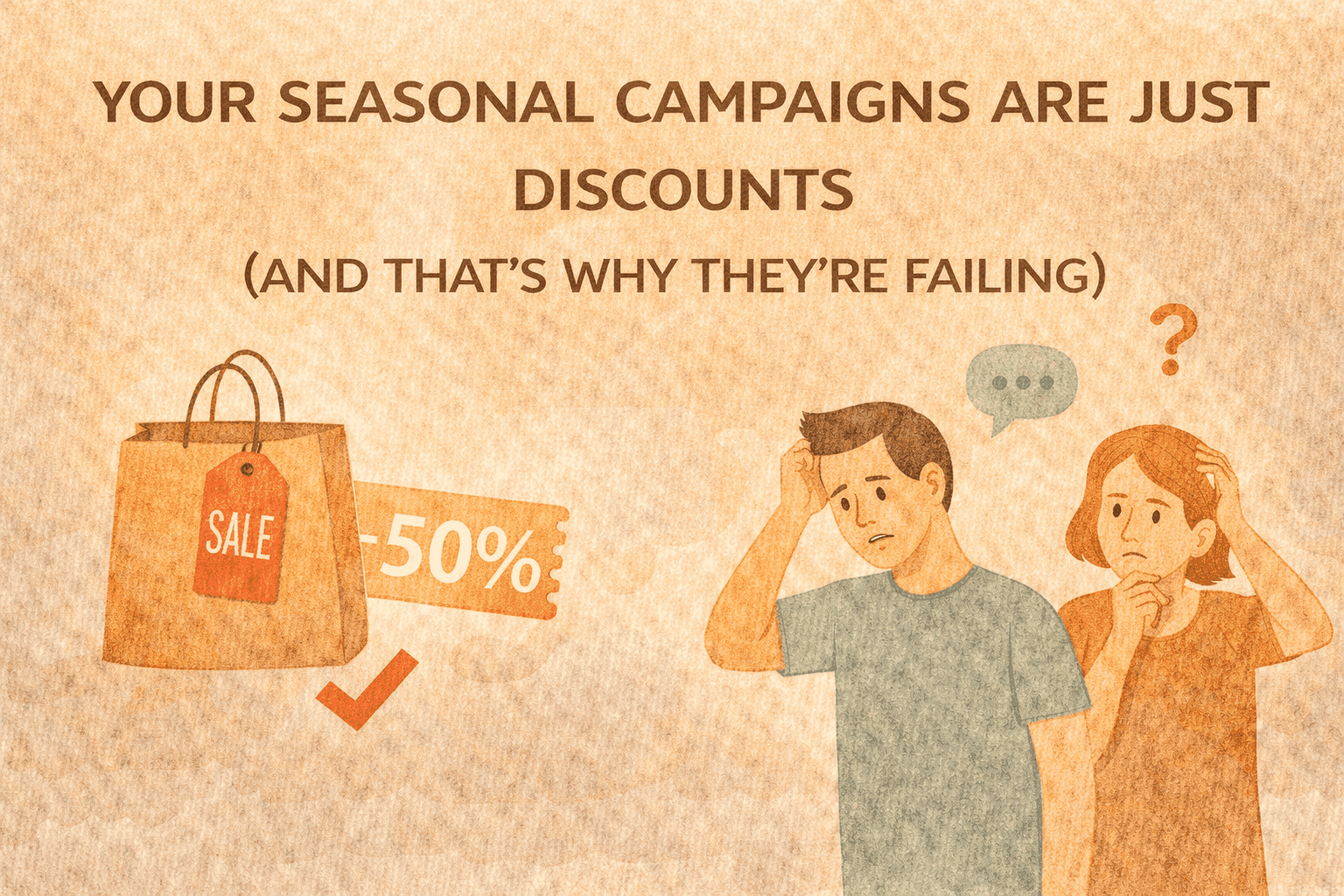
The Holiday Customer Paradox: High Acquisition, Low Retention
The holiday season brings a flood of new customers. Black Friday. Cyber Monday. Christmas shopping. Your customer count surges.
Then January arrives. Those new customers vanish.
64% of brands see lower retention from holiday customers. Nearly two-thirds of holiday customers are lower quality than your regular customers.
This isn't inevitable. It's a symptom of treating seasonal customers differently than year-round customers - focusing on the transaction rather than the relationship.
This holiday season, brands focused on retention saw 40% better results. The brands winning holiday retail aren't just acquiring new customers - they're activating existing loyal customers. And they're converting new holiday shoppers into that loyal base for next year.
Nearly all brands use loyalty programs. Loyalty programs work. But most brands don't integrate holiday customers into their loyalty ecosystem effectively.
You're spending heavily to acquire holiday customers. You're letting them walk away. That's negligent.
The Three Failures of Seasonal-Only Thinking
Failure 1: Transaction Focus
Holiday marketing is almost entirely transactional: deals, discounts, urgency. Buy now. Save today.
No relationship building. No brand connection. No reason to return when discounts end.
Customers acquired through pure discount messaging are trained to wait for discounts. They don't become loyal customers - they become deal hunters who disappear until next Black Friday.
Failure 2: No Post-Season Nurture
Holiday campaigns end December 26. Maybe a quick New Year sale. Then silence.
The critical window for converting holiday buyers into repeat customers - the weeks immediately after purchase - goes unutilized. No follow-up. No relationship building. No second-purchase nudge.
Failure 3: Siloed Seasonal Campaigns
Holiday marketing operates separately from year-round retention strategy. Different messaging. Different offers. Different customer treatment.
Customers acquired during holidays should enter the same retention system as customers acquired any other time - with adjustments for their seasonal entry point.
The Post-Holiday Opportunity
The real value of holiday customers isn't captured in December. It's captured in January, February, and the months that follow.
The Second Purchase Bridge
After the first purchase, 27% of customers make a second purchase. The second purchase is the inflection point.
Holiday customers who make a second purchase in January become loyal customers. Those who don't become one-time buyers. Your post-holiday strategy determines which path they take.
The Loyalty Program Window
Half of holiday shoppers join loyalty programs during the holidays. Holiday shoppers are primed for loyalty enrollment.
But enrollment alone isn't enough. Activation - getting them to engage with the program - determines whether they become loyal or lapse.
The Relationship Moment
Holiday purchases often have emotional significance. Gifts for loved ones. Self-treats during celebrations. Memories attached to products.
That emotional context is an opportunity for brand connection - if you capture it through thoughtful follow-up rather than just transaction confirmation.
The Year-Round Loyalty Framework: Converting Seasonal to Permanent
Stop treating holiday customers as seasonal phenomenon. Build systems that convert them into year-round loyalists.
The Year-Round Loyalty Framework has four phases:
Phase 1: Holiday Acquisition with Retention Intent
Acquire holiday customers in ways that set up retention.
Loyalty-Forward Acquisition:
Integrate loyalty into holiday marketing:
- Feature loyalty program benefits in holiday campaigns
- Offer loyalty enrollment as part of checkout
- Provide bonus points for holiday purchases
- Highlight ongoing value beyond the holiday deal
46% of shoppers join loyalty programs during holidays. Lead with loyalty, not just discounts.
Value Beyond Discount:
Holiday messaging should include brand value, not just price value:
- Quality messaging alongside discount messaging
- Brand story elements in holiday campaigns
- Social proof and customer testimonials
- Reasons to choose you beyond price
Customers acquired through value messaging retain better than customers acquired through discount-only messaging.
Data Capture:
Capture retention-enabling data during holiday acquisition:
- Email with explicit permission
- SMS opt-in
- Birthday for anniversary marketing
- Gift-giver vs. self-purchaser (different follow-up paths)
Phase 2: Immediate Post-Holiday Nurture
The weeks after holiday purchase are critical for retention.
Thank-You Sequence:
Holiday purchases deserve special thank-you treatment:
- Personalized thank-you email (not generic)
- Acknowledgment of holiday context ("We hope your gift was perfect")
- Introduction to brand beyond holiday shopping
- Loyalty program reminder/enrollment
Gift-Giver Follow-Up:
Customers who purchased gifts need different treatment than self-purchasers:
- "How did they like it?" check-in
- Suggestion to treat themselves now
- "Something for yourself" post-holiday offers
- Introduction to product categories for self-purchase
- Potential to reach the gift recipient (with appropriate consent)
Self-Purchaser Nurture:
Customers who bought for themselves:
- Product usage tips and education
- Complementary product recommendations
- Review request
- Second-purchase incentive
Phase 3: Q1 Re-Engagement
January through March is make-or-break for holiday customer retention.
New Year Campaign:
After the holidays, customers treat themselves. Capture this momentum:
- "New Year, New You" positioning
- Post-holiday self-treat offers
- Leftover inventory clearance with value positioning
- New collection introduction
Loyalty Activation:
For customers who enrolled but haven't engaged:
- Points balance reminder
- Easy redemption opportunities
- Tier progress communication
- Exclusive member offers
Win-Back for Non-Purchasers:
For holiday customers who haven't returned:
- "We miss you" messaging
- Personalized recommendations based on holiday purchase
- Incentive to return
- Feedback request (why haven't they returned?)
Phase 4: Year-Round Integration
Integrate holiday customers into standard retention programs.
Lifecycle Automation:
Holiday customers should enter standard lifecycle flows:
- Post-purchase nurture sequences
- Replenishment reminders (if applicable)
- Milestone celebrations
- Win-back sequences
Personalization Based on Entry:
Adjust messaging based on holiday acquisition:
- Reference their holiday purchase in communications
- Acknowledge anniversary of first purchase next holiday season
- Recommend based on holiday purchase history
- Re-engage before next holiday season
Seasonal Re-Activation:
As next holiday season approaches:
- Early outreach to previous holiday customers
- VIP early access for returning holiday shoppers
- Loyalty bonus for holiday repeat purchase
- Anniversary recognition
Implementation Timeline
Pre-Holiday (September-October)
Strategy Development:
- Define post-holiday nurture sequences
- Plan Q1 re-engagement campaigns
- Prepare loyalty enrollment integration
- Set up holiday customer tracking/segmentation
Technical Setup:
- Configure holiday customer segments
- Build post-holiday email flows
- Integrate loyalty enrollment into checkout
- Set up gift-giver vs. self-purchaser tracking
Early Outreach: 45% of 2024 holiday sales happened before Black Friday. Start retention-focused campaigns early. Reach previous holiday customers first with exclusive early access.
During Holiday (November-December)
Execution:
- Launch loyalty-integrated holiday campaigns
- Capture customer data at acquisition
- Tag customers by acquisition source/type
- Begin immediate post-purchase sequences
Monitoring:
- Track loyalty enrollment rates
- Monitor post-purchase engagement
- Identify high-value holiday acquisitions
- Gather feedback on holiday experience
Post-Holiday (January-March)
Activation:
- Execute Q1 re-engagement campaigns
- Activate lapsed loyalty members
- Launch win-back for non-returning customers
- Introduce holiday customers to year-round offerings
Analysis:
- Measure holiday customer retention rates
- Compare to prior year holiday cohorts
- Calculate ROI of retention efforts
- Identify optimization opportunities
Measurement Framework
Holiday Customer Cohort Tracking
Track holiday customers as distinct cohorts:
Retention Metrics:
- 30-day repeat purchase rate
- 90-day repeat purchase rate
- 12-month retention rate
- Compare to non-holiday customer cohorts
Loyalty Metrics:
- Holiday customer loyalty enrollment rate
- Loyalty activation rate (engaged with program)
- Points redemption rate
- Tier progression rate
Revenue Metrics:
- Holiday customer LTV
- Second purchase rate
- AOV of subsequent purchases
- Compare to non-holiday LTV
The North Star: Holiday Customer Second-Purchase Rate
The ultimate measure of holiday retention success is whether holiday customers make a second purchase.
HCSPR Calculation:
Holiday Customer Second-Purchase Rate = (Holiday Customers Who Make Second Purchase within 90 Days) / (Total Holiday First-Time Customers)
Benchmarks:
- Poor: <15% HCSPR
- Average: 15-25% HCSPR
- Good: 25-35% HCSPR
- Excellent: >35% HCSPR
Compare to your overall first-to-second purchase rate. Holiday customers should approach (ideally match) your standard rate if retention efforts are effective.
The Year-Round Imperative
Holiday ecommerce sales reached $241.4 billion. That's massive acquisition opportunity.
Focusing on retention is 5x more efficient. Retention is more efficient than continuous acquisition.
Follow the playbook for engaged customers. The playbook is known. Most brands just don't execute it.
Seasonal Opportunities Beyond Holidays
The Year-Round Loyalty Framework applies to all seasonal peaks, not just winter holidays.
Valentine's Day: February spike in gifts. Follow up with "treat yourself" messaging in March. Convert gift-givers to self-purchasers.
Mother's Day / Father's Day: Spring gift purchases. Similar follow-up strategy - convert gift buyers to year-round customers. Track gift recipients for potential direct outreach (with consent).
Back-to-School: August/September peak. Students and parents acquired during back-to-school become loyal if nurtured through fall. Different product needs emerge throughout school year.
Summer Sales: Summer clearance brings deal-focused shoppers. Challenge is same as holiday - converting discount buyers to full-price loyalists. Requires value messaging beyond price.
Each seasonal peak brings new customers. Each represents retention opportunity if treated as relationship start rather than transaction end.
VIP Treatment for Holiday Customers
Your best holiday customers deserve special treatment.
Identify High-Value Holiday Acquisitions:
Not all holiday customers are equal. Identify those with highest potential:
- High AOV first purchases
- Multiple holiday purchases
- Non-discount purchases
- Category purchases suggesting high LTV potential
Accelerated VIP Track:
Fast-track high-potential holiday customers:
- Immediate loyalty tier upgrade or bonus points
- Personal thank-you communication
- VIP early access to spring collections
- Dedicated support channel
Anniversary Recognition:
When next holiday season arrives:
- "One year ago" anniversary recognition
- VIP early access for returning holiday shoppers
- Loyalty bonus for holiday repeat purchase
- Personalized recommendations based on last year's purchase
70% of consumers say personalized holiday offers influence purchases. Personalization based on holiday purchase history shows you remember them.
80% of shoppers prefer exclusive holiday offers. Exclusivity creates loyalty.
Your holiday customers represent massive potential. You've already paid to acquire them. They've already purchased from you. They already know your brand.
Converting them from one-time holiday buyers to year-round loyal customers is infinitely more efficient than acquiring new customers next holiday season.
Build the Year-Round Loyalty Framework:
- Holiday acquisition with retention intent from the start
- Immediate post-holiday nurture that builds relationship
- Q1 re-engagement that captures the post-holiday moment
- Year-round integration that treats holiday customers as permanent
Holiday shoppers don't have to be seasonal visitors.
They can be your next loyal customers.
If you build the system to convert them.
CAC : LTV Calculator
Lifetime value, payback and the ratio that decides whether you can afford to grow.
Your Holiday Strategy Acquires Customers You'll Never See Again - Here's How to Fix That
Your Email Automation Is Stuck on Welcome Flows - Here's the Full Lifecycle System
Your Best Customers Get the Same Treatment as Everyone Else - That's Costing You
Your Birthday Emails Are Lazy Revenue Theater - Here's What Actually Works
Ultimate Guide To Seasonal Repeat Purchase Strategies
Customer Retention Economics: The Unit Economics of Loyalty
Newsletter
The Uncommon Insights Letter
Practical FMCG & eCommerce growth playbooks — margins, retention and scaling tactics, straight to your inbox.
Turn customer retention into profit you can see
Get a hands-on operator to turn the frameworks above into results — book a free audit call.