The Insurance Gap That Bankrupts "Successful" eCommerce Brands
Your eCommerce business is one product liability lawsuit away from extinction. One data breach from catastrophic customer loss. One warehouse fire from inventory wipeout. And if you're like most founders, you're dramatically underinsured-or insured for the wrong things entirely. In 2023, product ...
6 min read · 14 February 2026
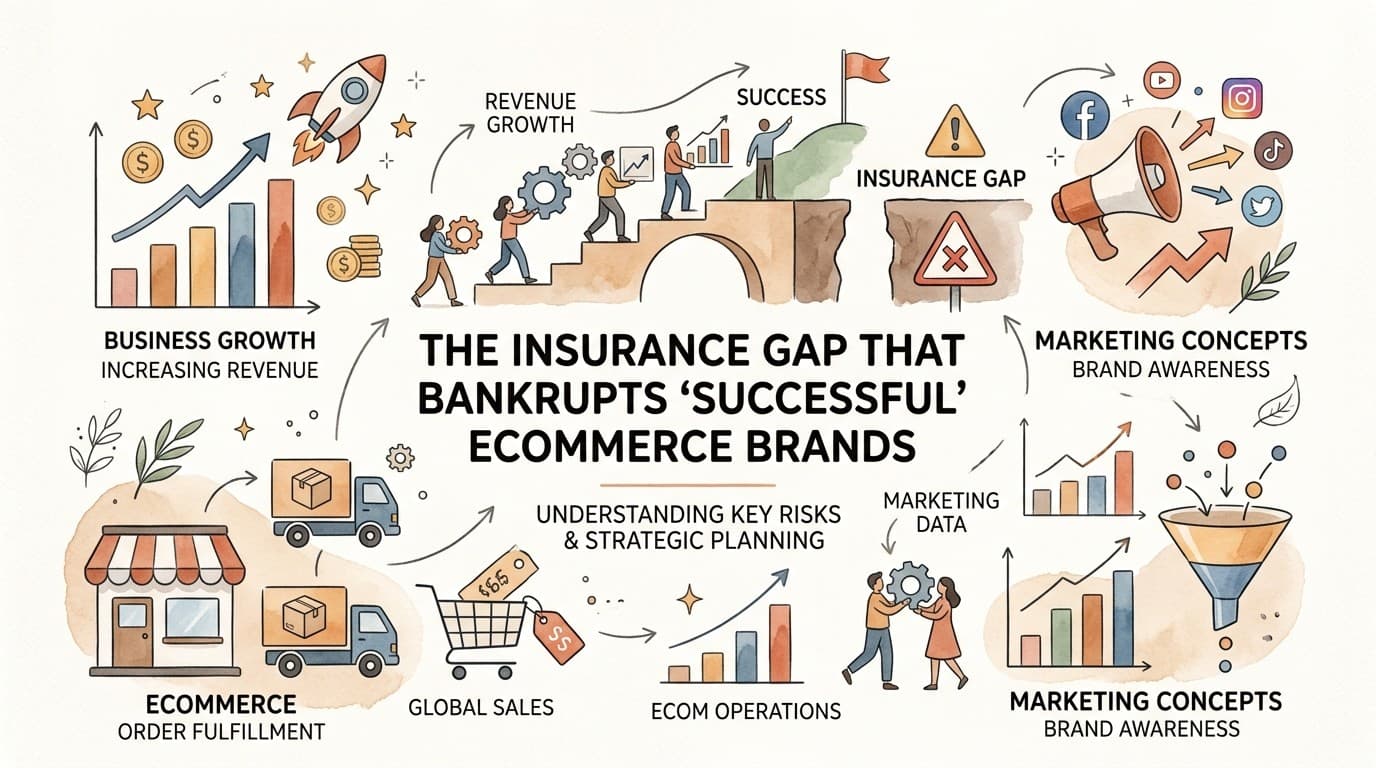
The Insurance Gap That Bankrupts "Successful" eCommerce Brands
Your eCommerce business is one product liability lawsuit away from extinction. One data breach from catastrophic customer loss. One warehouse fire from inventory wipeout. And if you're like most founders, you're dramatically underinsured-or insured for the wrong things entirely.
In 2023, product liability lawsuits involving online sales increased by 40%, highlighting the critical need for robust insurance protection. Yet most eCommerce operators treat insurance as an afterthought-something to address when they "get bigger."
That thinking is negligent. Insurance isn't a scaling luxury. It's survival infrastructure.
The Five Coverage Pillars for Physical Product eCommerce
Pillar 1: Product Liability Insurance
If you sell physical products, product liability insurance is non-negotiable. Period.
Product liability insurance covers legal claims if a product causes harm to a customer. This coverage includes medical expenses and legal fees associated with such claims.
What It Covers:
- Manufacturing defects (product made incorrectly)
- Design defects (product designed unsafely)
- Marketing defects (inadequate warnings or instructions)
- Legal defense costs (even if claim is frivolous)
What It Doesn't Cover:
- Intentional misconduct
- Warranty claims without injury
- Product recalls (requires separate coverage)
Coverage Amounts:
- Minimum: $1M per occurrence
- Recommended: $2-5M per occurrence for established brands
- High-risk products (supplements, electronics, children's items): $5M+ minimum
Cost Reality: On average, small e-commerce businesses can generally expect to pay $500 to $1,000 annually, though costs can be higher for riskier product lines or businesses with high revenue.
Platform Requirements: Many online marketplaces, including Amazon, now require sellers to have insurance if they reach a certain sales threshold. Amazon specifically requires $1M in product liability coverage once you exceed $10,000 in sales in any month.
Pillar 2: General Liability Insurance
General liability protects against third-party claims unrelated to product defects.
General liability covers a range of ecommerce business risks. It can help with financial protection if someone other than an employee gets hurt or you damage someone else's property.
What It Covers:
- Bodily injury on your premises
- Property damage caused by your business operations
- Personal injury (libel, slander, copyright infringement)
- Advertising injury (false advertising claims)
Common Scenarios:
- Delivery driver trips on your warehouse floor
- Customer visits your pop-up and injures themselves
- Competitor claims your advertising copy infringes their trademark
Coverage Amounts:
- Standard: $1M per occurrence / $2M aggregate
- Home-based operations: May require separate rider on homeowner's policy
Pillar 3: Cyber Liability Insurance
Given that you conduct your business online, Cyber Liability Insurance is the most important coverage for retailers selling products online, especially for anyone storing customer data.
What It Covers:
- Data breach notification costs
- Credit monitoring for affected customers
- Forensic investigation
- Legal defense and settlements
- Regulatory fines and penalties
- Business interruption from cyber events
What It Doesn't Cover:
- Pre-existing vulnerabilities knowingly ignored
- Social engineering losses (often requires separate coverage)
- Nation-state attacks (typically excluded)
Coverage Triggers:
- Customer credit card data stolen
- Ransomware attack locks your systems
- Phishing attack compromises customer accounts
- Third-party vendor breach exposes your data
Coverage Amounts:
- Minimum: $500K for businesses storing limited data
- Recommended: $1M+ for businesses with significant customer databases
- High-volume operations: $2-5M based on transaction volume
Cost Reality: Cyber insurance starts at an average of $57 per month. Worth every cent given breach costs averaging $150+ per compromised record.
Pillar 4: Business Property and Inventory Insurance
Business property insurance covers theft, loss, or damage to your inventory and business property.
What It Covers:
- Inventory (finished goods, raw materials)
- Equipment (computers, machinery, fixtures)
- Building improvements (if leasing)
- Business interruption (lost income during covered event)
Critical Distinction: Your homeowners policy likely won't cover business-related items. If you run your business from home, you need separate coverage.
Inventory Valuation Methods:
- Actual Cash Value: Depreciated value (pays less, costs less)
- Replacement Cost: What it costs to replace (pays more, costs more)
For inventory-heavy eCommerce businesses, replacement cost coverage prevents catastrophic loss in fire or theft scenarios.
Special Considerations:
- Goods in transit: Require inland marine insurance
- 3PL warehouse: Verify their coverage limits and your exposure
- International shipments: Ensure coverage extends beyond domestic borders
Pillar 5: Workers' Compensation
If you have employees-even one part-time warehouse helper-workers' compensation is likely legally required.
What It Covers:
- Medical expenses for workplace injuries
- Lost wages during recovery
- Rehabilitation costs
- Death benefits for fatal workplace accidents
What It Doesn't Cover:
- Intentional self-injury
- Injuries while intoxicated
- Injuries outside scope of employment
State Requirements: Nearly every state requires workers' comp for businesses with employees. Penalties for non-compliance include fines and personal liability for owners.
The Coverage Gap Analysis
Most eCommerce businesses have dangerous gaps between their coverage and their exposure:
Gap 1: Growth Outpacing Coverage Your policy from two years ago covered $100K in inventory. You now carry $500K. Are you covered?
Gap 2: Supply Chain Blind Spots Your product liability policy covers products you manufacture. But what about products from your Chinese supplier? If you import or export products outside of North America, check with your broker to ensure that the products meet industry standards.
Gap 3: Third-Party Fulfillment Your 3PL has insurance. Does it cover your goods? At what limits? What's your exposure in the gap?
Gap 4: International Sales Your policy covers domestic sales. Does it extend to Australian customers? UK? EU? Each jurisdiction creates exposure.
Gap 5: Product Evolution You added a supplement line last quarter. Did you notify your insurer? Supplements often require specific coverage riders.
The Insurance Stack by Revenue Stage
Stage 1: $0-$500K Revenue
Minimum Coverage:
- Product Liability: $1M
- General Liability: $1M
- Cyber Liability: $500K (if storing customer data)
- Property: Actual cash value of inventory + equipment
Approximate Annual Cost: $2,000-$5,000
Stage 2: $500K-$2M Revenue
Recommended Coverage:
- Product Liability: $2M
- General Liability: $2M
- Cyber Liability: $1M
- Property: Replacement cost coverage
- Business Interruption: 6 months operating expenses
- Workers' Comp: As required
Approximate Annual Cost: $5,000-$15,000
Stage 3: $2M-$10M Revenue
Comprehensive Coverage:
- Product Liability: $5M
- General Liability: $5M
- Cyber Liability: $2M
- Property: Full replacement cost
- Business Interruption: 12 months operating expenses
- Umbrella Policy: $2-5M excess coverage
- Directors & Officers: $1M
- Employment Practices Liability: $1M
Approximate Annual Cost: $15,000-$50,000
Stage 4: $10M+ Revenue
Enterprise Coverage:
- All above with increased limits
- Product Recall Insurance
- International Coverage Extensions
- Key Person Insurance
- Business Continuity Coverage
Approximate Annual Cost: $50,000-$200,000+
The Broker Selection Framework
The Hartford is the overall best provider of ecommerce business insurance because it has the full range of coverage and flexibility in limits to match your business size.
But choosing an insurer matters less than choosing the right broker. Look for:
Specialization: Brokers who understand eCommerce face different risks than generalists assume.
Carrier Access: Brokers with relationships across multiple carriers can shop your coverage effectively.
Claims Support: Your broker should advocate for you during claims, not just sell policies.
Annual Reviews: Proactive brokers schedule annual coverage reviews-not just renewal reminders.
The Claims Documentation Protocol
Insurance only pays when you can prove your loss. Establish documentation systems now:
Inventory Records:
- Current inventory valuation report (updated monthly minimum)
- Photos/video of inventory and warehouse
- Purchase receipts for all stock
Product Documentation:
- Supplier certifications and testing results
- Manufacturing specifications
- Warning labels and instruction documentation
Cyber Documentation:
- System access logs
- Security audit reports
- Data handling procedures
Incident Documentation:
- Report all incidents immediately (even minor ones)
- Document with photos, witness statements, written narratives
- Preserve all communications related to incidents
Claims denied for insufficient documentation are claims you paid premiums for but will never collect. Documentation discipline prevents this.
The Insurance ROI Calculation
Insurance isn't a cost-it's an investment with calculable returns.
Scenario: $500K inventory destroyed in warehouse fire
- Without insurance: $500K loss + business closure + customer loss
- With insurance ($5K annual premium): $500K recovery + business continuity coverage
ROI: 100x return on a single claim.
The probability-weighted expected value of insurance almost always exceeds the premium cost for businesses with significant assets at risk.
Ecommerce business insurance offers key protections for online store owners, from product liability and cyberattacks to shipping issues and business interruption. Whether you're selling on Amazon, Etsy, Shopify, or your own site, this coverage helps protect your business, your customers, and your reputation from unexpected setbacks.
The question isn't whether you can afford insurance. The question is whether you can afford to operate without it.
Get quotes this week. Review coverage monthly. Update policies as you scale. Insurance is infrastructure, not overhead.
Unit Economics Calculator
Contribution margin per order after COGS, shipping and fees — the number scaling actually depends on.
Ecommerce Business Insurance Australia: The Gaps That Could Kill Your Brand
The Risk Assessment Framework for Growth-Stage eCommerce
eCommerce vendor risk management
The Security Breach Waiting to Happen: Why Growing eCommerce Brands Are Sitting Ducks
Checklist: Fixed vs Variable Costs for Startups
International Sales Compliance: The Checklist That Keeps You Legal
Newsletter
The Uncommon Insights Letter
Practical FMCG & eCommerce growth playbooks — margins, retention and scaling tactics, straight to your inbox.
Turn scaling guide into profit you can see
Get a hands-on operator to turn the frameworks above into results — book a free audit call.