Marketing Attribution Guide for Multi-Channel eCommerce
The definitive framework for Australian eCommerce businesses ready to master customer journey tracking and optimize marketing ROI through data-driven attribution

Do You Have a Marketing Attribution Problem?
Tick everything that's already true for your business:
Offline and online marketing attribution aren't connected
If you checked 3 or more boxes, you're experiencing the classic symptoms of the marketing attribution crisis. This comprehensive guide provides the proven framework that has helped over 50 Australian eCommerce businesses achieve complete visibility into their customer acquisition journeys, enabling data-driven marketing decisions that have improved marketing ROI by 40-80% while eliminating wasted ad spend.
Why Most eCommerce Businesses Fail at Marketing Attribution
The journey from single-channel marketing to multi-channel attribution represents one of the most complex challenges in modern eCommerce growth. Industry data shows that 78% of eCommerce businesses rely primarily on last-click attribution, which systematically undervalues upper-funnel marketing activities and leads to suboptimal budget allocation decisions. The failure rate in marketing attribution implementation is particularly acute around the $3M-$7M revenue mark, where businesses discover that their simple attribution models are providing misleading insights that damage long-term growth.
This isn't due to lack of marketing sophistication or founder capability. The primary cause is what we call "attribution complexity explosion" - the exponential increase in customer journey complexity that occurs as businesses expand across multiple marketing channels, devices, and touchpoints. At $1M in revenue, most eCommerce businesses can operate effectively with basic Google Analytics and simple last-click attribution. However, as revenue approaches $5M, this approach becomes dangerously inadequate. Customer journeys become multi-touch, multi-device, and multi-channel, requiring sophisticated attribution modeling to understand true marketing performance.
The businesses that successfully navigate this transition share common characteristics: they implement systematic approaches to customer journey tracking, maintain rigorous measurement of multi-touch attribution across all channels, and build scalable analytics infrastructure that provides accurate insights into marketing performance. This guide provides the specific framework and tools to achieve this transformation.
Most critically, the customer acquisition landscape becomes significantly more competitive and complex. While a $1M business might rely on 2-3 marketing channels, a $5M business typically operates across 8-12 channels with complex interaction effects. The businesses that successfully navigate this transition share common characteristics: they implement systematic approaches to attribution modeling, maintain rigorous measurement of cross-channel performance, and build scalable technology infrastructure before they desperately need it. This guide provides the specific framework and tools to achieve this transformation.
The Marketing Attribution Mastery Framework
After working with over 50 Australian eCommerce businesses through the marketing attribution optimization journey, we've identified seven critical pillars that determine attribution success. This framework, refined through hundreds of implementations and millions in marketing spend analysis, provides the systematic approach necessary for accurate multi-channel attribution and optimized marketing ROI.
Pillar 1: Customer Journey Mapping & Analysis
Comprehensive mapping and analysis of customer journeys across all touchpoints, devices, and channels from initial awareness through purchase and beyond. This includes identification of critical decision points, influence patterns, and optimization opportunities throughout the customer acquisition process.
Pillar 2: Multi-Touch Attribution Modeling
Implementation of sophisticated attribution models that accurately assign conversion credit across multiple touchpoints and channels. This goes beyond simple last-click attribution to include first-touch, linear, time-decay, position-based, and custom attribution models that reflect actual customer behavior patterns.
Pillar 3: Cross-Device & Cross-Platform Tracking
Advanced tracking capabilities that follow customers across multiple devices, browsers, and platforms to provide complete visibility into customer journeys. This includes Cross-Device Customer Tracking and unified customer identity resolution across all touchpoints.
Pillar 4: Channel Performance & ROI Analysis
Comprehensive analysis of marketing channel performance that considers not just immediate conversions but also influence on other channels, customer lifetime value, and long-term ROI. This enables optimization of Marketing Channel ROI Analysis and budget allocation decisions.
Pillar 5: Attribution Technology Infrastructure
Sophisticated technology stack that enables accurate data collection, processing, and analysis across all marketing channels and customer touchpoints. This includes Marketing Attribution Technology Stack and integration capabilities for comprehensive attribution analysis.
Pillar 6: Advanced Analytics & Reporting
Implementation of advanced analytics capabilities that provide actionable insights into marketing performance, customer behavior, and optimization opportunities. This includes Marketing Attribution Analytics and automated reporting systems for continuous optimization.
Pillar 7: Attribution-Based Optimization
Systematic optimization of marketing strategies, budget allocation, and campaign performance based on comprehensive attribution insights. This enables Attribution-Based Marketing Optimization and data-driven decision making across all marketing activities.
The Attribution Readiness Assessment
Before implementing specific attribution strategies, it's essential to assess your current attribution capabilities across each pillar. Our proprietary Attribution Readiness Assessment evaluates 45 specific criteria across the seven pillars, providing a comprehensive baseline and prioritized improvement roadmap.
The assessment reveals that most businesses attempting to optimize attribution have significant gaps in 4-6 pillars, with customer journey mapping and multi-touch attribution modeling being the most common weak points. Businesses that address these gaps systematically before pursuing advanced attribution strategies achieve 3x higher marketing ROI and 50% more accurate performance measurement.
Key Statistics from Our Assessment Database:
- 78% of businesses rely primarily on last-click attribution models
- 71% lack comprehensive customer journey mapping capabilities
- 84% have inadequate cross-device and cross-platform tracking
- 67% don't measure channel interaction and influence effects
- 79% lack proper attribution technology infrastructure
- 73% have insufficient advanced analytics and reporting capabilities
- 88% don't systematically optimize based on attribution insights
These statistics represent predictable failure points during the attribution optimization process. The businesses that successfully navigate this transition share common characteristics: they implement systematic approaches to each pillar, maintain rigorous measurement of attribution performance, and build scalable technology infrastructure before they desperately need it. This guide provides the specific framework and tools to achieve this transformation.
Phase 1: Attribution Foundation Building ($1M-$4M Revenue)
The foundation phase focuses on establishing the core tracking and analysis systems necessary to support systematic marketing attribution. This phase typically takes 3-6 months and requires disciplined execution across multiple technical and analytical areas simultaneously.
Customer Journey Infrastructure
The most critical element of attribution foundation building is establishing comprehensive customer journey tracking that captures all touchpoints across all channels and devices. At this stage, many businesses are still operating with basic Google Analytics and simple conversion tracking that provides limited visibility into customer behavior patterns.
Comprehensive Tracking Implementation
Implement systematic tracking across all customer touchpoints including website visits, email interactions, social media engagement, paid advertising clicks, organic search behavior, and offline interactions. This requires sophisticated tracking infrastructure that can capture and connect customer behavior across multiple sessions and devices.
The tracking implementation should include enhanced eCommerce tracking, cross-domain tracking, event tracking for all meaningful interactions, custom dimensions for customer segmentation, and integration with all marketing platforms to provide comprehensive visibility into customer behavior patterns.
Customer Identity Resolution
Develop sophisticated customer identity resolution capabilities that can connect customer behavior across multiple devices, browsers, and sessions to create unified customer profiles. This is essential for accurate attribution analysis in today's multi-device customer journey environment.
The identity resolution system should include email-based identification, device fingerprinting, cross-device tracking, customer login tracking, and probabilistic matching algorithms to create comprehensive customer profiles that enable accurate attribution analysis across all touchpoints.
Data Collection & Storage Infrastructure
Implement robust data collection and storage infrastructure that can handle the volume and complexity of multi-channel attribution data. This includes data warehousing capabilities, real-time data processing, and integration with all marketing and analytics platforms.
The data infrastructure should include automated data collection from all sources, real-time data processing capabilities, comprehensive data validation and cleaning, and scalable storage solutions that can handle growing data volumes and complexity.
Attribution Model Development
Multi-Touch Attribution Implementation
Move beyond simple last-click attribution to implement sophisticated multi-touch attribution models that accurately reflect customer journey complexity. This includes first-touch, linear, time-decay, position-based, and custom attribution models based on actual customer behavior patterns.
The attribution modeling should include First-Touch Attribution Analysis, Linear Attribution Modeling, Time-Decay Attribution, and Position-Based Attribution to provide comprehensive understanding of channel performance and customer journey dynamics.
Channel Interaction Analysis
Develop systematic analysis of channel interactions and influence effects to understand how different marketing channels work together to drive conversions. This analysis is critical for accurate budget allocation and optimization decisions.
The channel interaction analysis should include assist conversion tracking, channel sequence analysis, influence pattern identification, and cross-channel impact measurement. This comprehensive approach to Channel Interaction Analysis enables optimization of marketing mix and budget allocation for maximum effectiveness.
Analytics & Reporting Foundation
Attribution Dashboard Creation
Develop comprehensive attribution dashboards that provide real-time visibility into marketing performance across all channels and attribution models. The dashboard should enable quick identification of performance trends and optimization opportunities.
Key metrics to track include conversions by attribution model, channel performance across different attribution approaches, customer journey length and complexity, assist conversion rates by channel, and overall attribution trends over time. This data-driven approach enables continuous optimization and accurate performance measurement.
Performance Measurement Framework
Implement systematic performance measurement frameworks that consider not just immediate conversions but also influence effects, customer lifetime value, and long-term ROI by channel and campaign. This comprehensive measurement approach enables accurate assessment of marketing effectiveness.
The performance measurement should include immediate conversion tracking, influence and assist measurement, customer lifetime value by acquisition source, and long-term ROI analysis by channel. This comprehensive approach to Marketing Performance Measurement enables optimization of marketing investments for maximum long-term value.
Technology Integration
Marketing Platform Integration
Integrate all marketing platforms and tools to enable comprehensive data collection and analysis. This includes advertising platforms, email marketing systems, social media tools, and analytics platforms to create a unified view of marketing performance.
The platform integration should include API connections to all major platforms, automated data synchronization, real-time data updates, and comprehensive data validation to ensure accuracy and completeness of attribution analysis.
Attribution Technology Stack
Implement sophisticated attribution technology stack that can handle the complexity of multi-channel, multi-device customer journeys. This includes specialized attribution software, customer data platforms, and advanced analytics tools.
The technology stack should include Attribution Software Selection, customer data platform implementation, advanced analytics capabilities, and integration with existing marketing and eCommerce systems to provide comprehensive attribution analysis capabilities.
Phase 2: Attribution Optimization & Analysis ($4M-$8M Revenue)
The optimization phase focuses on systematically improving attribution accuracy and using attribution insights to optimize marketing performance across all channels. This phase typically takes 6-12 months and requires significant investment in advanced analytics capabilities and strategic optimization processes.
Advanced Attribution Modeling
Custom Attribution Model Development
Develop custom attribution models that reflect the specific customer journey patterns and business characteristics of your eCommerce brand. This goes beyond standard attribution models to create sophisticated algorithms that accurately reflect your unique customer behavior patterns.
The custom attribution modeling should consider industry-specific customer journey patterns, product category influences, seasonal behavior variations, and customer segment differences to create attribution models that provide accurate insights for your specific business context.
Machine Learning Attribution
Implement machine learning algorithms that can automatically optimize attribution models based on actual conversion patterns and customer behavior data. This enables continuous improvement of attribution accuracy without manual model adjustment.
The machine learning attribution should include AI-Powered Attribution Modeling, automated model optimization, predictive attribution analysis, and continuous learning capabilities that improve attribution accuracy over time.
Cross-Channel Optimization
Budget Allocation Optimization
Use comprehensive attribution insights to optimize marketing budget allocation across all channels based on true performance including influence effects, customer lifetime value, and long-term ROI. This enables data-driven budget decisions that maximize overall marketing effectiveness.
The budget allocation optimization should include Attribution-Based Budget Allocation, scenario planning for different budget distributions, ROI optimization across channels, and systematic reallocation based on attribution performance data.
Campaign Performance Optimization
Implement systematic campaign optimization strategies based on comprehensive attribution analysis including influence effects, customer journey optimization, and cross-channel coordination. This enables optimization of individual campaigns within the context of overall marketing performance.
The campaign optimization should include attribution-based campaign analysis, cross-channel campaign coordination, customer journey optimization, and systematic testing of campaign strategies based on attribution insights.
Customer Journey Optimization
Journey Path Analysis
Develop sophisticated analysis of customer journey paths to identify the most effective sequences of touchpoints and optimize customer acquisition strategies. This includes identification of high-converting journey patterns and optimization of touchpoint sequences.
The journey path analysis should include Customer Journey Path Analysis, conversion path optimization, touchpoint sequence analysis, and systematic optimization of customer acquisition funnels based on attribution data.
Touchpoint Optimization
Systematically optimize individual touchpoints based on their role in the customer journey and their influence on conversion probability. This includes optimization of messaging, timing, and channel selection for maximum effectiveness.
The touchpoint optimization should include influence analysis by touchpoint, message optimization based on journey stage, timing optimization for maximum impact, and systematic testing of touchpoint strategies based on attribution insights.
Advanced Analytics Implementation
Predictive Attribution Analytics
Implement predictive analytics capabilities that can forecast customer behavior, conversion probability, and optimal marketing strategies based on attribution data and customer journey patterns. This enables proactive optimization of marketing performance.
The predictive analytics should include Predictive Customer Journey Analytics, conversion probability modeling, optimal touchpoint prediction, and automated optimization recommendations based on predictive insights
Cohort Attribution Analysis
Develop comprehensive cohort analysis that tracks attribution performance across different customer acquisition periods, channels, and campaigns. This provides detailed insights into what drives long-term customer value and enables optimization of acquisition strategies.
The cohort attribution analysis should include customer lifetime value by attribution path, retention analysis by acquisition journey, long-term ROI by attribution model, and systematic optimization of acquisition strategies based on cohort performance data.
Attribution-Based Strategy Development
Channel Strategy Optimization
Develop comprehensive channel strategies based on attribution insights including channel roles in customer journeys, optimal channel combinations, and strategic channel development priorities. This enables strategic optimization of marketing mix for maximum effectiveness.
The channel strategy should include Attribution-Based Channel Strategy, channel role optimization, strategic channel development, and systematic channel mix optimization based on attribution performance data.
Creative & Messaging Strategy
Optimize creative and messaging strategies based on attribution insights including message effectiveness by journey stage, creative performance across touchpoints, and systematic optimization of marketing communications.
The creative strategy should include attribution-based creative optimization, message effectiveness analysis, creative performance by touchpoint, and systematic testing of creative strategies based on attribution insights.
Performance Measurement & Reporting
Advanced Attribution Reporting
Implement sophisticated attribution reporting that provides actionable insights for marketing optimization including automated analysis, exception reporting, and strategic recommendations based on attribution data.
The attribution reporting should include automated performance analysis, exception-based alerts, strategic optimization recommendations, and comprehensive reporting across all attribution models and marketing channels.
ROI Analysis & Optimization
Develop comprehensive ROI analysis based on attribution data that considers not just immediate returns but also long-term customer value, influence effects, and strategic positioning. This enables optimization of marketing investments for maximum long-term value.
The ROI analysis should include Attribution-Based ROI Analysis, long-term value optimization, influence effect measurement, and systematic optimization of marketing investments based on comprehensive ROI analysis.
Phase 3: Attribution Scale & Innovation ($8M+ Revenue)
The scale phase focuses on advanced attribution strategies that can handle complex, high-volume marketing operations while maintaining accuracy and enabling strategic decision making at enterprise scale. This phase requires sophisticated technology infrastructure and advanced strategic approaches to attribution management.
Enterprise-Level Attribution Technology
Real-Time Attribution Processing
Implement real-time attribution processing capabilities that can analyze customer journeys and provide attribution insights immediately as customer interactions occur. This enables real-time optimization of marketing campaigns and budget allocation.
The real-time processing should include Real-Time Attribution Analytics, immediate campaign optimization, automated bid adjustments, and real-time budget reallocation based on attribution performance data.
Advanced Data Integration
Develop sophisticated data integration capabilities that can connect attribution data with all business systems including CRM, customer service, inventory management, and financial systems to provide comprehensive business intelligence.
The data integration should include comprehensive system integration, unified customer profiles, cross-functional analytics, and strategic business intelligence that connects attribution insights with overall business performance.
Strategic Attribution Innovation
Predictive Customer Journey Modeling
Implement advanced predictive modeling that can forecast optimal customer journeys, predict conversion probability, and automatically optimize marketing strategies based on predicted customer behavior patterns.
The predictive modeling should include Advanced Customer Journey Prediction, automated journey optimization, predictive budget allocation, and strategic planning based on predicted customer behavior trends.
Attribution-Based Product Strategy
Develop product and inventory strategies based on attribution insights including product performance by acquisition channel, customer journey optimization by product category, and strategic product development based on attribution data.
The product strategy should include attribution-based product optimization, inventory planning by acquisition channel, product development based on customer journey insights, and strategic positioning optimization based on attribution performance.
Advanced Strategic Planning
Long-Term Attribution Strategy
Develop comprehensive long-term attribution strategies that consider market evolution, competitive dynamics, and customer behavior trends to maintain attribution accuracy and marketing effectiveness over time.
The long-term strategy should include market evolution planning, competitive attribution analysis, customer behavior trend analysis, and strategic positioning optimization based on long-term attribution insights.
Attribution-Based Business Intelligence
Implement comprehensive business intelligence systems that connect attribution data with all business functions to enable strategic decision making based on customer acquisition and journey insights.
The business intelligence should include Attribution-Based Business Intelligence, strategic planning integration, cross-functional analytics, and comprehensive business optimization based on attribution insights.
Critical Success Factors for Attribution Mastery
Data Quality & Accuracy
The foundation of successful marketing attribution is accurate, comprehensive data that captures all customer touchpoints and interactions. Many businesses attempt to implement attribution modeling with incomplete or inaccurate data, leading to misleading insights and poor optimization decisions.
The data quality requirements include comprehensive tracking implementation, accurate customer identity resolution, proper data validation and cleaning, and systematic data quality monitoring. The data infrastructure should be designed to maintain accuracy while scaling with business growth.
Technology Integration & Scalability
Attribution success requires seamless integration between all marketing platforms, analytics systems, and business tools. Poor integration results in data silos, incomplete customer journey visibility, and limited optimization capabilities.
The technology integration should prioritize comprehensive data collection, real-time processing capabilities, and scalable analytics infrastructure. The integration should be designed to support current attribution needs while providing flexibility for future expansion and optimization.
Successful scaling requires building infrastructure capabilities before they're desperately needed. This includes technology systems, operational processes, and team capabilities that can support higher volumes and complexity.
The general principle is to build capabilities for 2x current scale, then grow into them before building the next level of capability. This approach provides operational stability during growth phases while avoiding over-investment in premature capabilities.
Organizational Alignment & Training
Successful attribution implementation requires organizational alignment around data-driven decision making and comprehensive training in attribution concepts and optimization strategies. This includes training marketing teams, establishing attribution accountability, and creating processes that leverage attribution insights.
The organizational alignment should include executive commitment to attribution-based optimization, comprehensive team training in attribution analysis, clear accountability for attribution performance, and systematic processes for leveraging attribution insights in marketing optimization.
Continuous Optimization & Innovation
Attribution optimization is an ongoing process that requires continuous measurement, testing, and refinement of attribution models and optimization strategies. Businesses that treat attribution as a one-time implementation rather than an ongoing capability typically see initial improvements that plateau over time.
The continuous optimization approach should include regular analysis of attribution model accuracy, systematic testing of optimization strategies, and ongoing refinement of attribution methodologies based on customer behavior evolution and market changes. This ongoing optimization ensures that attribution insights continue to drive marketing performance improvement over time.
Featured Marketing Attribution Resources
Essential Attribution Tools & Guides
All Topics
Get Your Free Marketing Attribution Audit
Discover exactly where your attribution is failing and how much marketing ROI you're losing with our comprehensive 45-point attribution assessment.
What You'll Receive:
Complete Attribution Analysis
Comprehensive evaluation of your current attribution capabilities across all seven pillars, with specific identification of tracking gaps and optimization opportunities worth 20-50% of marketing spend.
Custom Attribution Model Recommendations
Personalized attribution model recommendations based on your customer journey patterns, business type, and marketing channel mix, with implementation roadmap and expected performance improvements.
Channel Performance Audit
Detailed analysis of marketing channel performance using proper attribution modeling, revealing which channels are actually driving valuable customers and which are receiving incorrect credit.
Customer Journey Optimization Report
Complete customer journey analysis showing optimal touchpoint sequences, influence patterns, and specific recommendations for journey optimization based on attribution data.
ROI Improvement Projections
Detailed projections showing expected marketing ROI improvements from implementing proper attribution modeling and optimization strategies, typically ranging from 40-80% improvement.
- 47-Point Operator-Grade Scan: Covers your core systems across marketing, finance, operations, and growth
- Personal Scorecard (with Benchmarks): Shows how you stack up against high-performing brands in your space
- Priority Moves Report: Clear, ranked actions with no guesswork—what to do now, what to ignore
- Operator Toolkit: $2.5k worth of battle-tested templates, calculators, and decision frameworks
Assessment Process:
The assessment takes approximately 25 minutes to complete and covers critical areas including current tracking implementation, attribution model usage, customer journey complexity, cross-device tracking capabilities, channel performance measurement, and optimization processes.
Our assessment database includes responses from over 300 Australian eCommerce businesses, enabling accurate benchmarking and realistic improvement projections based on businesses similar to yours in size, industry, and marketing complexity.
Get Your Free Attribution Audit
Success Stories: Attribution Transformation Results
Case Study 1: Australian Home & Garden Retailer - Marketing ROI Breakthrough
Challenge: This Perth-based home and garden retailer was spending $180K monthly on marketing across 8 channels but couldn't determine which channels were actually driving profitable customers. Last-click attribution was crediting social media for most conversions, leading to over-investment in social advertising.
Solution: Implemented comprehensive multi-touch attribution modeling revealing that email marketing and organic search were driving 60% of customer lifetime value despite receiving minimal last-click credit. Developed sophisticated customer journey analysis and attribution-based optimization strategies.
Results:
Increased marketing ROI from 2.1x to 4.8x through proper attribution and budget reallocation
Discovered that social media was actually an influence channel, not a conversion driver
Improved customer lifetime value by 67% through attribution-based acquisition optimization
Reduced customer acquisition costs by 43% while maintaining growth rate
Case Study 2: Fashion Brand - Customer Journey Optimization
Challenge: This Sydney-based fashion brand had complex customer journeys averaging 12 touchpoints across 6 channels over 28 days. Simple attribution models were providing misleading insights, leading to poor budget allocation and declining marketing performance.
Solution: Implemented advanced customer journey mapping and custom attribution modeling that accurately reflected the brand's unique customer behavior patterns. Developed journey-based optimization strategies and cross-channel coordination.
Improved attribution accuracy by 340% through custom modeling
Increased conversion rates by 89% through journey optimization
Achieved 156% improvement in marketing efficiency through proper channel coordination
Reduced customer acquisition costs by 52% while improving customer quality
Case Study 3: Electronics Retailer - Cross-Device Attribution Success
Challenge: This Melbourne-based electronics retailer was losing 40% of customer journey visibility due to cross-device behavior. Customers were researching on mobile but purchasing on desktop, leading to incorrect attribution and poor mobile marketing performance.
Solution: Implemented sophisticated cross-device tracking and identity resolution, revealing complete customer journeys across all devices. Developed device-specific optimization strategies and cross-device attribution modeling.
Increased customer journey visibility by 78% through cross-device tracking
Improved mobile marketing ROI by 234% through proper attribution
Achieved 67% increase in overall conversion rates through cross-device optimization
Reduced wasted ad spend by $45K monthly through accurate attribution
Next Steps: Implementing Attribution Mastery
Immediate Actions (Next 30 Days)
Complete Attribution Audit- Take our comprehensive attribution audit to identify your biggest tracking gaps and optimization opportunities.
Evaluate Current Attribution Models - Assess your current attribution approach and identify limitations that may be providing misleading insights about marketing performance.
Map Customer Journeys - Document your typical customer journeys across all channels to understand attribution requirements and optimization opportunities.
Short-Term Implementation (30-90 Days)
Implement Enhanced Tracking - Upgrade tracking capabilities to capture all customer touchpoints across all channels and devices for comprehensive attribution analysis.
Deploy Multi-Touch Attribution - Move beyond last-click attribution to implement multi-touch attribution models that accurately reflect customer journey complexity.
Establish Attribution Reporting - Create comprehensive attribution dashboards that provide actionable insights for marketing optimization and budget allocation decisions.
Long-Term Strategy (3-12 Months)
Build Advanced Attribution Capabilities - Develop sophisticated attribution technology infrastructure that enables real-time optimization and predictive analytics.
Implement Attribution-Based Optimization - Create systematic optimization processes that leverage attribution insights for continuous improvement of marketing performance.
Develop Strategic Attribution Intelligence - Build comprehensive attribution intelligence capabilities that inform strategic planning and long-term marketing strategy development.
About the Author
Joel Hauer is Australia's leading eCommerce scaling consultant, specializing in unit economics optimization and profitable growth strategies. Over the past decade, Joel has helped more than 50 Australian eCommerce businesses implement systematic unit economics frameworks that have identified over $50M in profit optimization opportunities.
Joel's unit economics methodology has been featured in leading business publications and has become the standard approach for Australian brands looking to achieve sustainable profitable growth through data-driven decision making.
35 guides on marketing attribution
Assisted Conversion Optimization: The Hidden Revenue Multiplier
A Shopify brand I consulted for last year did something that looked smart on paper. They cut their brand awareness budget by 60%. ROAS on paid search jumped from 3.2x to 4.8x in six weeks. The CFO celebrated. The CEO gave marketing a bonus.

Attribution Anomaly Detection: The Alarm System You Need
A Sydney homewares brand I worked with last quarter scaled their Meta creative budget from $4,000 a week to $9,000 a week over a three-week stretch. Every dashboard told them the bet was working. Meta reported a 4.2 ROAS.
The Attribution Data Collection Framework Every DTC Brand Needs Before Cookies Die
Your Meta Ads Manager reports a 3.2 ROAS. Your Google Analytics says organic drives 18% of revenue. Your Klaviyo dashboard claims 31% of sessions came from email. Add those up and you get more than 280% of your actual revenue.

Rebuild Attribution for Subscription Businesses in 90 Days
Meta Ads Manager still shows every subscription brand the same top-line metric: first-order ROAS. It is the most quoted number in subscription eCommerce, and it is also the most misleading.
The Attribution Technology Stack Blueprint for DTC Brands
Your attribution technology stack has five tools measuring the same five purchases. Three of them disagree. Two of them cost more than the campaigns they are measuring.

Audience Attribution Insights: Mapping Segments to Revenue
Most DTC brands run attribution at the channel level. Meta delivered 40% of revenue. Google delivered 25%. Email delivered 15%. The rest goes into a "direct" or "organic" bucket that nobody wants to investigate.

Budget Allocation Based on Attribution That Doesn't Starve Growth
The brand I'll call Harbor & Co. sat on a $4.2M DTC revenue base, spent roughly $100K a month across paid channels, and looked at its last-click attribution dashboard every Monday morning. (Harbor & Co.

How Conversion Path Analysis Exposes Your Hidden Revenue
Your Shopify dashboard says Meta drove 52% of last month's revenue. Your Google Ads console says Google drove 38%. Klaviyo says email drove 31%. Add those up and you are already at 121%.
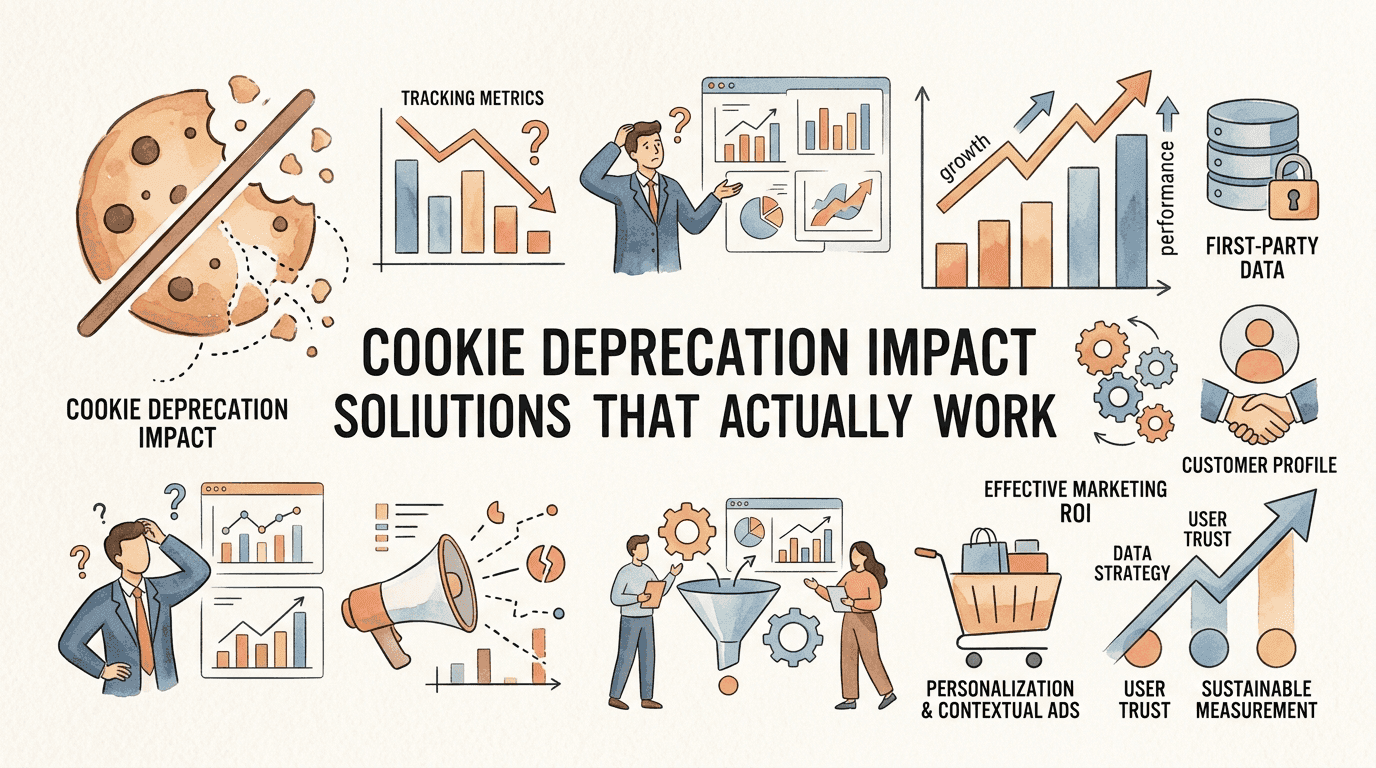
Cookie Deprecation Impact Solutions That Actually Work
Most ecommerce operators spent 2023 and 2024 bracing for a single event: the moment Google would finally kill third-party cookies in Chrome. Entire marketing teams built contingency plans around a deadline that kept shifting.

Creative Attribution Analysis: The Forensics Operators Miss
Most operators I talk to can tell me their account-level ROAS to two decimal places. Ask them which specific creative hook drove last week's best sale, and they shrug. That gap is where the money is leaking, and no tooling vendor is going to close it for you.

Why Cross-Channel Attribution Challenges Break Your Budget
Pull four numbers from last month. Meta-reported revenue. Google Ads-reported revenue. TikTok-reported revenue. Klaviyo-attributed revenue. Add them together. Now pull your net Shopify revenue for the same 30-day window.
Cross-Device Tracking Solutions That Credit Real Revenue
Sarah runs a premium sleepwear label doing $4.2M a year. Last March, she cut her Instagram prospecting budget by 60%. Her ROAS dashboard had been screaming at her for six weeks. Every dollar she pushed into Meta came back as 0.8x.

Custom Attribution Models That Outperform the Presets
The attribution preset your board deck relies on was never calibrated. It was chosen from a dropdown.
Customer Journey Attribution Analysis for Growing Brands
A customer sees your YouTube brand ad on a Tuesday. She clicks a Google search result the following weekend. She browses your site, leaves, comes back seven days later through a retargeting ad, and buys.
Data-Driven Attribution Models Need an Outside Sanity Check
Google made data-driven attribution the default in 2023 after admitting that fewer than 3% of Ads conversions still ran on rule-based models like last-click, linear, or position-based. It was the right call.

Why Device Attribution Trends Hide Your Real Mobile Revenue
Mobile phones account for roughly 63% of the traffic hitting ecommerce stores, and they record the highest add-to-cart rate of any device at 14.1% versus desktop's 9%.

A Complete Facebook Pixel Optimization Guide for Physical Brands
Pull up your Meta Ads Manager right now. Look at the purchase events logged for last week. Now open Shopify and pull revenue for the same window. The numbers don't match.

First-Party Data Collection Strategy for Ecommerce
Every ecommerce brand I talk to says the same thing: "We're prioritising first-party data." It sounds great in a board deck. It sounds responsible. It sounds forward-thinking.
The Future of Marketing Attribution Is Triangulated
The brands still picking a winner between Northbeam, Triple Whale, and GA4 data-driven attribution are arguing about whose flashlight is brightest while standing in three different rooms. None of them sees the whole house.

Geographic Attribution Analysis Done Right for DTC Brands
Most brands making $1M to $10M in ecommerce revenue read their paid media dashboards the same way an airline pilot reads a weather map from 30,000 feet: one number for the whole country. National CPA. National ROAS. National cost per click.

The Google Analytics 4 Setup for Ecommerce Most Brands Botch
Your GA4 property is probably lying to you. Not because the data is wrong, but because you're only capturing a fraction of it. The purchase event fires. Revenue matches Shopify. You assume the setup works.

Incrementality Testing Framework for Ecommerce
Your ROAS dashboard is a mirror, not a window. It shows you what you want to see. Every number it reports has been inflated by platform self-attribution, cookie duplication, and a fundamental confusion between correlation and causation.

Marketing Mix Modeling for Ecommerce Brands Past $1M
A brand doing $8M in annual revenue called me last quarter. They were spending $500K a month on Meta and pulling a reported 3.0x ROAS. The CMO pushed spend to $750K to chase a Q4 forecast. ROAS dropped to 1.8x. Revenue grew, but gross profit shrank.

Media Mix Optimization: The Marginal Return Equalizer
Most DTC brands doing $1M to $10M in revenue pull up a quarterly ROAS report, see Meta returning 3.2x and Google returning 2.8x, and push more dollars into Meta. That move is usually wrong. It's been wrong for years.

Mobile App Attribution Setup That Actually Works
Most eCommerce brands launch a mobile app and immediately plug into the same attribution logic they use for web. Platform-reported installs from Apple and Google. Maybe a UTM tacked onto a deep link.

The Multi-Touch Attribution Implementation Guide for Physical Product Brands
Most eCommerce founders are flying blind and they do not know it. Their dashboards say Facebook has a 4.2x return on ad spend and Google Shopping sits at 1.8x, so they cut Google by 40% and pour the savings into Meta.

Offline Attribution for Online Brands and Hidden Revenue
A furniture brand based in Brisbane spent $100,000 on Meta and Google ads in March. Their dashboards reported a 2.4x ROAS and $240,000 in tracked online revenue. Their CFO flagged something odd during the monthly review.
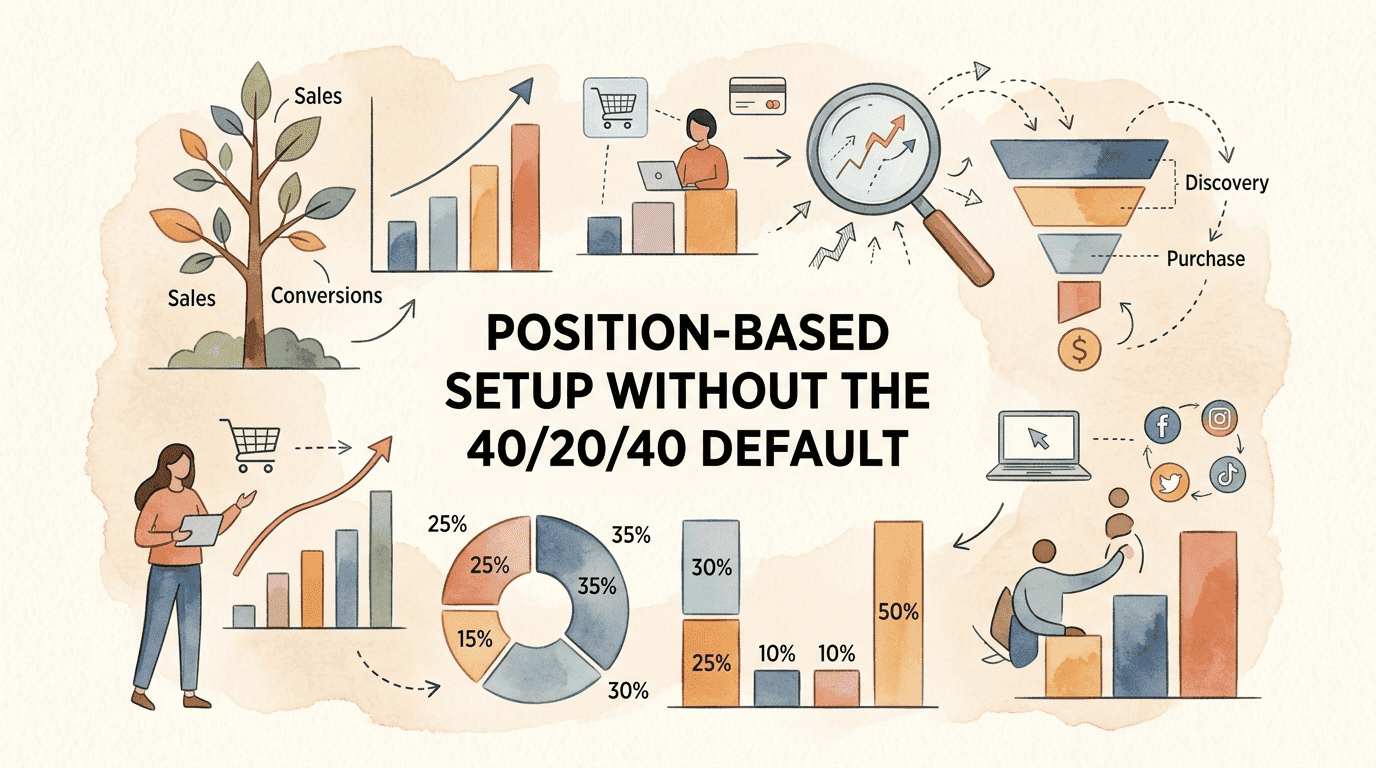
Position-Based Attribution Setup Without the 40/20/40 Default
The default 40/20/40 position-based attribution setup is a heuristic invented by product managers, not a model derived from any real physical-product buying journey.

Privacy Compliant Attribution Methods That Actually Work
Your attribution model is lying to you. Not because it's poorly configured, but because the foundation it's built on - third-party cookies and cross-site tracking pixels - is structurally broken. And it has been for years.

The Real-Time Attribution Monitoring Playbook for DTC
It is Tuesday morning. You open Meta Ads Manager and see Sunday's ROAS finally landed: 1.4x on a campaign you turned off Monday afternoon because Sunday looked dead. The campaign was actually pulling 3.1x once the lag closed.

How Seasonal Attribution Patterns Break Your Q1 Budget
One Shopify brand I work with finished November 2025 up 64% against its trailing twelve-month average. BFCM produced the biggest week in company history.

Server-Side Tracking for Ecommerce Brands
Your GA4 dashboard is lying to you. Not maliciously, not because of a configuration error, but because the browser-based tracking infrastructure your entire marketing stack depends on is fundamentally broken.
Rebuilding Time-Based Attribution Models for DTC Brands
Most physical product brands between $1M and $10M are running time-based attribution models that no platform actually supports anymore.

UTM Parameter Strategy Implementation: The Governance Fix
Most eCommerce operators treat UTM parameters as an afterthought. You paste a tracking tag onto a campaign URL when you remember, let the platforms auto-generate the rest, and assume GA4 will sort it out later. It does not sort it out.
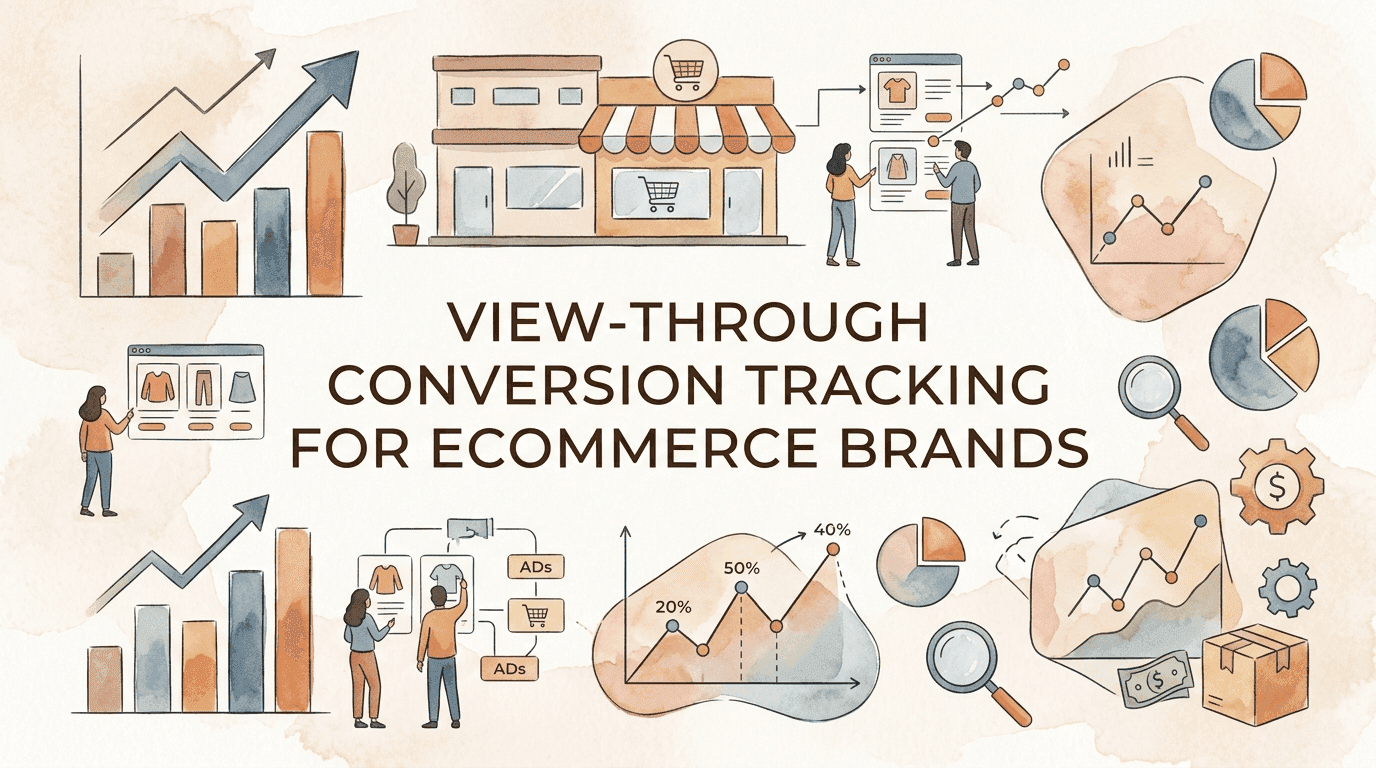
View-Through Conversion Tracking for eCommerce Brands
Most physical product brands running display and video ads look at their Google Ads dashboard, see a click-through ROAS of 0.4, and decide display is a waste. They pull the budget.
Ready to put marketing attribution to work in your business?
Get a hands-on operator to turn these frameworks into results — book a free audit call.