10 A/B Testing Ideas for eCommerce Ads
Explore 10 effective A/B testing strategies for eCommerce ads tailored to Australian shoppers, enhancing engagement and boosting conversions.
11 November 2025
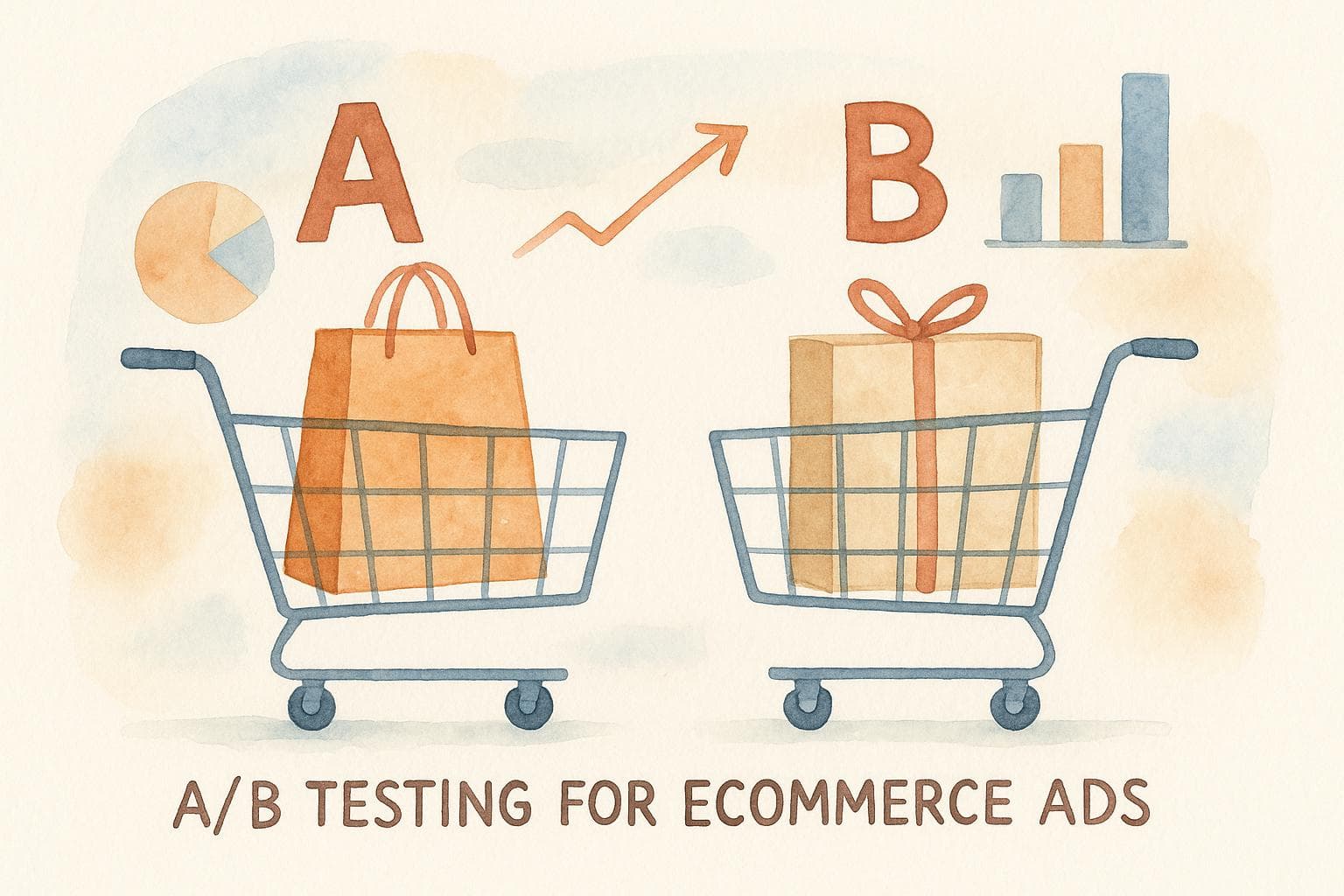
A/B testing is a proven way to improve eCommerce ad performance by comparing variations to see what works best. For Australian brands, tailoring ads to local preferences - like using AUD pricing, Australian spelling, or culturally relevant messaging - can make a big difference. Here are 10 practical A/B testing ideas to refine your campaigns:
- Test Ad Headlines: Compare urgency-focused headlines like "Limited Time Offer" versus value-based ones like "Save $20 on Aussie Orders."
- Experiment with Ad Images: Use lifestyle photos featuring Australian settings versus plain product shots.
- Change CTA Button Text: Test "Shop Now" against "Buy Now" to see which resonates more with Aussie shoppers.
- Tweak Discount Formats: Compare "$20 off" with "20% off" or "Free Shipping Over $75."
- Adjust Ad Copy Tone: Try conversational, casual language versus formal messaging.
- Incorporate Social Proof: Add customer reviews, star ratings, or trust badges to build credibility.
- Try Different Ad Formats: Test static images, carousel ads, or videos to find the most engaging format.
- Optimise Ad Timing: Run ads at different times to match peak shopping hours across Australian time zones.
- Segment Audiences: Target specific groups by location, age, or interests to uncover what works best for each.
- Add Urgency Cues: Use countdowns or low-stock alerts to encourage faster purchases.
These strategies can boost metrics like click-through rates, conversion rates, and cost per acquisition. By testing one variable at a time and focusing on local preferences, you can make smarter decisions that improve ad performance and ROI.
Quick Comparison:
| Test Idea | Key Metric Impact | Example Variation |
|---|---|---|
| Ad Headlines | Higher CTR, conversions | "Limited Time Offer" vs. "Shop Now" |
| Ad Images | Better engagement | Lifestyle photos vs. plain product shots |
| CTA Button Text | Increased clicks | "Shop Now" vs. "Buy Now" |
| Discount Formats | Improved trust, sales | "$20 Off" vs. "20% Off" |
| Ad Copy Tone | Audience connection | Casual vs. Formal |
| Social Proof | Boosted credibility | Reviews, badges, ratings |
| Ad Formats | Higher engagement | Video vs. Static Image |
| Ad Timing | Lower CPA, higher CTR | Evening vs. Morning ads |
| Audience Segments | Targeted performance | Metro vs. Regional |
| Urgency Cues | Faster purchases | Countdown timers vs. Low-stock alerts |
Each test offers actionable insights to refine your strategy for the Australian market. By continuously testing and analysing results, you can build campaigns that resonate with local shoppers and deliver stronger outcomes.
Introduce A/B Testing to your E-Commerce experience
A/B Testing Basics for eCommerce Ad Campaigns
A/B testing in eCommerce ad campaigns boils down to four key steps: forming a hypothesis, selecting variables, executing the test, and analysing the results. These steps form the backbone of effective ad performance improvements.
Hypothesis formation starts with crafting a prediction based on user data. For instance, you might hypothesise that "Switching the headline from 'Shop Now' to 'Limited Time Offer' will boost the click-through rate (CTR)." A clear hypothesis provides direction and focus for your test.
When it comes to variable selection, it’s critical to change only one element at a time - whether it’s the headline, image, or call-to-action text. Testing multiple changes at once muddles the results, making it impossible to pinpoint what actually caused any performance shifts.
Test execution ensures that both ad variations are shown to similar audience groups under the same targeting conditions. For Australian campaigns, it’s essential to consider local preferences and adhere to ACCC (Australian Competition and Consumer Commission) guidelines.
Finally, result analysis focuses on digging into the numbers with statistical significance in mind, rather than relying on surface-level observations. For example, a Sydney-based fashion retailer discovered that a headline emphasising urgency increased their CTR by 18% and their conversion rate by 12% over a two-week period.
For Australian eCommerce businesses, tracking the right metrics in the correct format is crucial. Key metrics include conversion rate (percentage of clicks that lead to purchases), click-through rate (CTR), and cost per acquisition (CPA) measured in Australian dollars. As a guideline, local eCommerce ads often aim for a CTR of 2–3% and a CPA below $50.00 AUD, though this varies by product category.
| Metric | Typical Australian Benchmark | Example Format |
|---|---|---|
| Conversion Rate | 1.5% – 3.0% | 2.75% |
| Click-Through Rate | 2.0% – 3.0% | 2.45% |
| Cost Per Acquisition | Under $50.00 AUD | $42.50 AUD |
Beyond metrics, the test duration and adherence to compliance standards significantly impact the reliability of your results. Tests should run for one to two weeks - or up to four weeks for ads with low traffic - to gather at least 1,000 impressions per variant. This ensures a 95% confidence level in your findings.
For Australian campaigns, compliance with ACCC guidelines is non-negotiable. This means clearly disclosing pricing, discounts, and terms, as well as ensuring any claims like "limited time" are accurate and verifiable. Not only does this align with legal requirements, but it also builds trust with Australian consumers, who value transparency.
By relying on statistical models, A/B testing transforms marketing decisions from guesswork into data-backed strategies. This method ensures every marketing dollar is spent wisely, driving measurable results.
A/B testing is not just a one-off exercise - it’s a continual process of improvement. Each test adds to a growing base of insights, helping refine future campaigns and keeping your Australian eCommerce ads competitive and effective.
1. Test Ad Headline Variations
Refining your ad headlines is one of the simplest yet most effective ways to boost engagement. Think of your headline as your ad's opening line - it’s what grabs attention and pulls people in. A well-crafted headline can turn passive viewers into active clickers, making it a critical factor in your campaign's success.
Relevance to the Australian eCommerce Market
For Australian eCommerce brands, testing headline variations is especially important because local consumers often respond uniquely to culturally relevant language and messaging. Using Aussie slang or referencing popular events like the Melbourne Cup can make your ads feel more relatable. Australian shoppers also tend to be price-conscious and value-driven, so headlines that highlight savings or perks - like "Save $20 on your next order" or "Free shipping for Aussie customers" - can significantly increase engagement. Adding these local touches not only boosts trust but also ensures your messaging feels tailored to the audience.
Potential to Improve Key Metrics
Headline testing has the potential to deliver big wins for your key advertising metrics. Studies from CXL show that tweaking headlines can account for up to 50% of the improvement in ad performance metrics for eCommerce campaigns. For instance, A/B testing Google Ads headlines can lead to a 25% or higher increase in click-through rates (CTR). In Australia, campaigns that use urgency-driven, localised headlines often see a 30% rise in CTR. Shopify also highlights that optimising ad headlines can significantly enhance first impressions and conversion rates because they’re the most prominent and visible part of your ad.
Ease of Implementation for eCommerce Brands
Platforms like Google Ads, Meta, and Shopify make headline testing straightforward. Simply create two or more headline options, run them simultaneously for similar audience segments, and let the platform handle the traffic split. After collecting enough data, you can analyse the results and identify which headline performs best. This process is quick, efficient, and doesn’t require advanced technical skills - making it accessible to eCommerce brands of all sizes.
Ability to Generate Actionable Insights
Testing your ad headlines isn’t just about improving CTRs; it’s also about understanding what resonates with your audience. For example, benefit-oriented headlines like "Get 20% off your first order" often outperform those that focus on product features. These insights can inform not just your ads but also your broader marketing efforts, from email subject lines to product descriptions. If headlines emphasising free shipping or local delivery perform better, it might signal a need to adjust your overall value proposition. Experimenting with different angles - such as emotional appeals versus logical benefits or urgency-based offers versus evergreen deals - helps you uncover what truly drives engagement.
| Headline Variant Type | Example (en-AU) | Potential Impact |
|---|---|---|
| Localised Reference | "Shop Aussie-Made Gifts – Free Shipping Over $50" | Builds local connection |
| Value Proposition | "Save 20% on Summer Essentials – Limited Time" | Boosts urgency and CTR |
| Emotional Trigger | "Feel the Comfort – Try Our Best-Selling Sheets" | Increases emotional engagement |
| Direct Offer | "Buy 1, Get 1 Free – This Week Only" | Drives immediate conversions |
Start your headline testing with a clear hypothesis, like "Localised headlines will increase CTR among Australian shoppers." Test one variable at a time - such as emotional versus rational appeals or localised versus generic messaging - so you can pinpoint exactly what’s driving the results. This focused approach ensures the insights you gain are practical and can shape future campaigns.
Next, we’ll look at how image styles can further enhance ad engagement.
2. Test Ad Image Styles
Visual content plays a huge role in shaping first impressions. The right image can grab attention, while the wrong one might be completely overlooked. For eCommerce brands, selecting the right visual style can make or break a campaign. This test helps fine-tune every visual element in your ads to maximise their impact.
Relevance to the Australian eCommerce Market
Australian shoppers tend to connect with authentic, locally inspired imagery that mirrors the country’s diverse population and lifestyle. Testing different image styles can uncover what resonates best with Aussie audiences - think local backdrops like Sydney’s beaches, Melbourne’s urban vibes, or models who reflect Australia’s multicultural makeup. Since visuals are highly influential in the Australian market, genuine representation often outperforms generic stock photos.
Potential to Improve Key Metrics
The right image style can significantly boost key performance metrics. For example, lifestyle images can increase conversion rates by up to 30% compared to plain product shots, especially for categories like clothing, homewares, and beauty products. Video ads, on the other hand, can deliver even stronger results, with conversion rates increasing by up to 80%.
Real-world examples back this up. In July 2022, The Iconic ran an A/B test featuring lifestyle images shot in Sydney. Over four weeks, these ads achieved a 22% higher click-through rate (CTR) and a 15% increase in conversion rates compared to product-only shots [The Iconic Annual Report 2022]. Similarly, Adore Beauty’s March 2023 campaign tested video ads highlighting skincare products in action. The results? A 35% higher conversion rate and a 28% lower cost per acquisition over six weeks [Adore Beauty Marketing Insights, 2023].
Ease of Implementation for eCommerce Brands
The good news? Testing image styles doesn’t have to be complicated. Most ad platforms include built-in A/B testing tools, making it easy to compare different visuals. You can use existing images or commission new ones. Start small: pick one variable, like lifestyle images versus product-only shots, and create two ad versions targeting similar audiences. For smaller brands, free or affordable tools and stock photos can help you get started without breaking the bank.
Ability to Generate Actionable Insights
Testing different image styles gives you a clear picture of what works best for your audience. If lifestyle images consistently outperform product-only shots, it might be worth investing in custom photoshoots featuring Australian settings and diverse models. These insights can influence more than just your ads - they can shape your website visuals, social media posts, and other marketing efforts. By analysing metrics like CTR, conversion rates, and audience segments (e.g., age, location, device), you’ll uncover what resonates most with your customer base.
| Image Style | Impact on Conversion | Best Use Cases |
|---|---|---|
| Lifestyle Photos | +10–30% conversion rate | Apparel, homewares, beauty |
| Product-Only Shots | Baseline performance | Electronics, B2B, technical products |
| Video/GIF | +20–80% conversion rate | Demonstrative, complex products |
Since most eCommerce traffic in Australia comes from mobile devices, ensure all images are optimised for mobile viewing. Start with a clear hypothesis - like “lifestyle images will increase CTR by 10%” - and test one variable at a time for accurate results.
Next, we’ll dive into how tweaking call-to-action button text can influence user behaviour and drive more conversions.
3. Compare Call-to-Action Button Text
The text on your call-to-action (CTA) buttons can be the deciding factor between a casual browser and a paying customer. Even small tweaks - like changing "Buy Now" to "Shop Now" - can significantly impact how people respond to your ads.
Relevance to the Australian eCommerce Market
For Australian shoppers, using language that feels local and relatable can make a big difference. Phrases tailored to Aussie audiences build trust and familiarity. For example, "Shop Now & Save $20 AUD" is far more engaging than a generic message with an unfamiliar currency.
Cultural preferences also play a role. Australians often favour a more laid-back sales approach. While "Buy Now" might feel too direct for some, options like "Shop Now", "See the Range", or "Order Now" strike a better balance. Testing variations like these can help you find what resonates most with your audience, ensuring your CTA feels inviting rather than pushy.
Potential to Improve Key Metrics
Testing your CTA button text can have a noticeable impact on your advertising results. Studies show that optimising CTA text can boost conversion rates by 14% to 21%, making it a highly effective way to improve metrics like click-through rates (CTR), conversion rates, and cost per acquisition.
Take the example of a Sydney-based eCommerce brand that tested "Buy Now" against "Shop Now" in their ads. The results? "Shop Now" delivered a 15% higher CTR and a 12% increase in conversions over two weeks. This highlights how aligning with local preferences can directly benefit your bottom line.
Direct CTAs like "Add to Cart" work well for customers ready to make a purchase, while softer options like "Learn More" are ideal for those still exploring their options.
Ease of Implementation for eCommerce Brands
Testing CTA text is simple and doesn’t require advanced tools or technical expertise. Most advertising platforms provide built-in A/B testing features, making it easy to compare different versions of your ads.
All you need to do is duplicate your ad, change the CTA text, and run both versions simultaneously. With real-time analytics, you’ll quickly see which CTA performs better. Start with straightforward comparisons like "Buy Now" versus "Shop Now", or experiment with "Add to Cart" and "Get Yours Today."
Ability to Generate Actionable Insights
CTA testing provides valuable insights into your audience's preferences and behaviours. You’ll learn which phrases drive the most engagement, which tone resonates with specific demographics, and what motivates your customers to act.
These insights go beyond individual campaigns. For instance, if "Shop Now" consistently outperforms "Buy Now", this preference likely applies across your website, email campaigns, and social media content. You may also discover that certain phrases or urgency cues work better for specific age groups or regions within Australia. These findings can shape your messaging across all customer touchpoints.
| CTA Text Variant | Use Case | Impact |
|---|---|---|
| Buy Now | Direct purchase intent | High conversions but may feel too forceful |
| Shop Now | General browsing | Broad appeal with a softer tone |
| Add to Cart | Lower commitment | Ideal for hesitant buyers |
| Get Yours Today | Urgency and exclusivity | Encourages impulse purchases |
| Learn More | Complex or high-value items | Boosts engagement for cautious shoppers |
Once you’ve nailed your CTA, consider testing how price and discount displays influence purchasing decisions. Analysing the entire customer journey - from the initial click to the final purchase - will help you refine your messaging across all platforms, from your website to social media and email campaigns.
Next, we’ll dive into how discount and price display formats can shape customer behaviour and improve campaign results.
4. Test Discount and Price Display Formats
How you present discounts and prices can make all the difference between catching a shopper's eye and sealing the deal. It's not just about the savings themselves - it’s about how they’re framed. For instance, a "$20 off" deal might feel more appealing than "20% off" for some products, while the opposite could hold true for others. This is especially important when catering to Australian shoppers, who have specific preferences.
Relevance to the Australian eCommerce Market
Australian shoppers expect pricing to feel familiar and local. Displaying prices as "$99.95" instead of "$99.95 AUD" builds trust, while using Australian spelling - like "favourite deals" instead of "favorite deals" - can make your messaging resonate more. Clarity is essential; misleading discounts can quickly erode trust. For example, testing "Free shipping on orders over $75" against "Save $15 on delivery" can help you identify which approach works best with Aussie customers.
Even date formats matter. Australians are accustomed to the DD/MM/YYYY format, such as "Ends 30/11/2025." Using the American MM/DD/YYYY format could confuse shoppers and undermine your message.
Potential to Improve Key Metrics
Fine-tuning how you display discounts and prices can boost key performance indicators like click-through rates, conversion rates, and cost per acquisition. For example, Brava Fabrics found that offering a universal 10% discount performed just as well as a chance to win a $300 gift card. Similarly, Zalora increased their checkout rate by 12.3% after testing clearer price and discount displays. The impact of different formats often depends on the type of product: percentage discounts tend to feel more compelling for high-ticket items, while dollar savings are more effective for budget-friendly products.
Ease of Implementation for eCommerce Brands
Testing different discount formats is straightforward with tools like Google Ads and Meta. These platforms let you run A/B tests by duplicating an ad and tweaking only the discount or price format. For instance, you could compare "20% off" with "$20 off" or test "Free shipping over $100" against "Save $15 on delivery." Since the technical setup is minimal, this is one of the easiest ways for eCommerce brands to experiment with pricing strategies.
Ability to Generate Actionable Insights
Experimenting with how you display discounts and prices can uncover valuable insights into your customers’ preferences. You’ll learn whether your audience responds better to percentage discounts, dollar amounts, or perks like free shipping. These findings often go beyond individual campaigns. For example, if "Free shipping over $75" consistently outperforms direct discounts, this insight could guide your approach across your website, email marketing, and social media. The data you gather from these tests can also inform broader decisions, such as pricing strategies, promotional timing, and inventory planning.
For tailored advice on optimising these strategies for Australian shoppers, you might consider working with local experts like Uncommon Insights.
| Discount Format | Example | Best Use Case | Typical Impact |
|---|---|---|---|
| Percentage Off | "20% Off" | Higher-priced items, sitewide sales | Feels more impactful for expensive items |
| Dollar Amount Off | "Save $20" | Lower-priced items, specific products | Offers clear, tangible savings |
| Free Shipping | "Free shipping over $75" | Categories with high shipping costs | Encourages larger purchases |
| Gift With Purchase | "Free tote with $100 spend" | Fashion or beauty products | Enhances perceived value |
These small changes in presentation can have a big impact across the sales funnel, helping you better connect with your audience.
Next, we’ll dive into how the tone of your ad copy can shape customer engagement and influence buying behaviour.
5. Test Ad Copy Tone
The tone of your ad copy can be the difference between someone casually browsing and actually making a purchase. It’s all about the style and emotion your words convey - whether that’s friendly, urgent, humorous, or authoritative. Nail this, and your ads will feel natural and engaging, not forced or out of touch. Testing different tones builds on earlier A/B testing methods and helps sharpen other elements of your ad strategy.
Relevance to the Australian eCommerce Market
Australian shoppers have a unique set of preferences when it comes to advertising. They tend to appreciate a conversational tone that feels genuine, reflecting local values like straightforwardness and a good sense of humour.
Using colloquial phrases and cultural nods can make your ads more relatable. For example, lines like “G’day! Grab your new look today” or “No worries, mate - shipping’s on us” strike a chord with Aussie audiences. You can also tie your tone to local seasons or events. A relaxed, summery feel works perfectly for December campaigns, while back-to-school messaging hits home in late January and February.
Potential to Improve Key Metrics
Switching up your tone can have a huge impact on performance. Shopify data shows that A/B testing taglines and ad copy can lead to double-digit increases in click-through and conversion rates. Some brands have even reported up to a 20% boost in CTR when they moved from formal to conversational language.
The tone you choose should align with your goals. For instance, an urgent tone like “Hurry, last chance to save $50!” might drive more clicks, while a calm, reassuring tone can build trust and increase conversions. One Australian fashion retailer saw a 15% increase in conversions by adopting a relaxed, colloquial style, using phrases like “Aussie summer essentials” in their ads.
Ease of Implementation for eCommerce Brands
Testing different tones is straightforward on most ad platforms. All you need to do is duplicate an existing ad, tweak the tone while keeping everything else the same, and set up a split test to compare results.
You could try contrasting tones like friendly versus authoritative (“Grab your new look today!” versus “Upgrade your wardrobe with premium essentials”) or playful versus serious. Just ensure that only the tone changes, so you can clearly see its impact on performance.
Ability to Generate Actionable Insights
Testing ad copy tones doesn’t just improve individual campaigns - it gives you a deeper understanding of who your audience is and what they respond to. You’ll see which tones drive the most engagement with Australian customers, how different segments react, and what works best for specific products or campaign goals.
This knowledge goes beyond ads. If conversational, humorous copy consistently outperforms formal messaging, you can apply that insight to your website, email marketing, and social media. For instance, younger shoppers might prefer playful tones, while older audiences might connect better with a more authoritative voice. Knowing this allows you to fine-tune your overall communication strategy.
The data gathered can also influence larger business decisions, like shaping your brand voice or improving customer service interactions. Brands that regularly test their ad elements, including tone, are more likely to see sustained growth in their digital performance.
For Australian eCommerce brands, partnering with local experts like Uncommon Insights can provide tailored advice and market-driven strategies to refine your ad copy tone and achieve better results.
Discover the tone that resonates with your Australian audience and turns window shoppers into loyal buyers. Up next, learn how social proof can further boost engagement.
6. Test Social Proof Elements
Social proof elements - like customer reviews, star ratings, testimonials, and trust badges - play a big role in how ads perform. Think of them as the online version of word-of-mouth recommendations. In Australia's competitive eCommerce space, these tools are essential for winning over potential buyers who can't see or touch products in person.
Relevance to the Australian eCommerce Market
Australian shoppers are known for being savvy and cautious when shopping online. According to Power Retail, more than 80% of Australian online shoppers check reviews before making a purchase. This makes it vital for local businesses to leverage social proof to stand out against bigger, more established players.
For instance, reviews that highlight local experiences - like "Fast delivery to Melbourne" or "Excellent customer service from the Sydney team" - can make a huge difference. Similarly, trust badges that feature the Australian Made logo or mention compliance with local consumer laws tend to resonate more with Aussie buyers than generic international certifications. This local touch mirrors the importance of tailoring headlines and images to an Australian audience.
Transparency and clear communication also go a long way with Australian consumers. They tend to trust reviews that include specific details, like delivery times to major cities or prices clearly displayed in AUD. This preference for straightforward, relatable information makes localised social proof a powerful tool for driving conversions.
Potential to Improve Key Metrics
Incorporating and testing social proof elements can have a noticeable impact on your key metrics. BigCommerce reports that product pages featuring reviews and testimonials can boost conversion rates by up to 18%. Additionally, a Nielsen study found that 92% of consumers trust recommendations from people they know, while 70% trust online reviews from strangers.
Take the example of Your Tea, an Australian contemporary fashion brand. By emphasising customer testimonials and positive reviews in their ad campaigns, they achieved 28% revenue growth and a 14.5% increase in conversion rates. Making social proof a visible part of their digital strategy directly contributed to these results.
To reduce hesitation and cart abandonment, try placing verified reviews near your call-to-action (CTA) or positioning trust badges next to pricing details. These small adjustments can lead to measurable improvements in conversion rates and even lower acquisition costs, making social proof testing a logical step for any eCommerce business.
Ease of Implementation for eCommerce Brands
Testing social proof elements doesn’t have to be complicated. Platforms like Google Ads and Meta make it easy to swap out creative assets and copy.
Start simple. For example, test whether star ratings or written testimonials perform better in your ads. You could also experiment with where trust badges are placed - try positioning them near pricing details instead of burying them at the bottom of your copy. Another idea is to compare the effectiveness of localised testimonials versus more generic ones.
The beauty of social proof testing is that it often involves highlighting content you already have, such as existing reviews, verified purchase badges, or trust certifications. There’s no need to create entirely new material.
Ability to Generate Actionable Insights
Beyond improving ad performance, social proof testing can give you valuable insights into your audience. For instance, you might find that reviews mentioning quick delivery to Sydney outperform generic testimonials or that placing trust badges near pricing increases add-to-cart rates.
These findings can shape your broader marketing strategy. Whether it’s refining your website, email campaigns, or social media content, understanding what resonates most with your audience helps you prioritise the right trust signals. Partnering with local experts like Uncommon Insights can help Australian brands turn these tests into long-term growth strategies.
7. Try Different Ad Formats
Ad formats connect with audiences in unique ways, and Australian eCommerce brands have a variety of options to explore across platforms like Meta, Google, and TikTok. Whether it's static images, carousel ads, videos, or collection formats, testing these options can help pinpoint what resonates most with your customers. Here's why experimenting with ad formats is essential for eCommerce success in Australia.
Relevance to the Australian eCommerce Market
Australian shoppers are heavily mobile-focused, which means the choice of ad format plays a big role for local brands. In a competitive eCommerce environment, standing out often depends on how effectively you present your products visually.
Mobile-first formats are particularly effective in Australia, especially during peak shopping periods like End of Financial Year sales or major holidays. Formats that highlight Australian-made products, local delivery options, or clearly display prices in AUD tend to perform well.
Australian consumers also favour direct, value-driven messaging. For example, collection ads are ideal for showcasing product ranges or seasonal items, while video ads excel at demonstrating how a product works or its benefits - something many Australians value before making a purchase.
Potential to Improve Key Metrics
Trying out different ad formats can lead to noticeable improvements in your performance metrics. For instance, Zalora increased its checkout rate by 12.3% after switching from static image ads to video ads during a 30-day product launch. Similarly, Grene doubled its purchase rate by using interactive carousel ads instead of static images in its Facebook campaigns.
Video ads often generate higher engagement and click-through rates, especially for products that need a bit of demonstration or lifestyle context. Carousel ads, on the other hand, can improve conversion rates by letting users explore multiple products or features in one ad, making the shopping experience smoother.
However, results can vary. While video ads may boost engagement, they can also come with higher acquisition costs if not targeted correctly. Static image ads, though less engaging, can be more cost-effective for certain products or audiences. The key is to test and see what works best for your specific goals.
Ease of Implementation for eCommerce Brands
Testing ad formats is relatively simple with tools available on platforms like Meta Ads Manager and Google Ads. These platforms offer built-in A/B testing features, allowing you to compare different ad formats while keeping other variables, like budget and targeting, consistent.
Start by defining your goal - whether it’s increasing click-through rates, driving conversions, or reducing acquisition costs. Then, test one variable at a time. For example, compare static images to carousel ads, or videos to collection formats.
Australian eCommerce brands can manage these tests in-house or work with local experts for more complex campaigns. All you need are creative assets in various formats and a basic understanding of campaign setup and analysis.
Ability to Generate Actionable Insights
Testing different ad formats gives you valuable insights into how your audience interacts with your products. For instance, you might find that video ads are perfect for launching new products, while carousel ads are more effective for retargeting campaigns. These insights don’t just improve individual campaigns - they can shape your overall creative strategy.
By understanding which formats perform best for specific audience segments, you can allocate your budget more effectively and create ads that match proven preferences. For example, if collection ads consistently outperform single-product ads for seasonal promotions, you can apply that knowledge across future campaigns.
When combined with other tests, like those for headlines or images, format testing helps build a comprehensive strategy for optimising your ad performance.
8. Test Ad Placement Timing
Getting the timing of your ads spot on can mean the difference between blowing your budget and seeing impressive returns. For Australian eCommerce brands, knowing when your customers are most likely to engage and convert is key to getting the most out of your advertising spend.
Why Timing Matters in the Australian Market
Australia’s shopping habits and local events create unique opportunities to fine-tune ad timing. Events like Click Frenzy, end-of-financial-year sales, and Boxing Day promotions can significantly influence when consumers are most receptive. Add to that the challenge of multiple time zones - from AWST in Perth to AEDT in Sydney and Melbourne - and it’s clear that timing isn’t one-size-fits-all. For instance, a campaign running at 6:00pm AEDT might catch Sydney commuters but could also reach Perth shoppers still at work. Testing different time slots allows you to uncover these regional variations and optimise your approach for Australia’s diverse shopping trends.
Boosting Campaign Performance Metrics
Getting your timing right doesn’t just help with engagement - it can directly improve your campaign metrics. A/B testing different ad schedules can lead to conversion increases of up to 20%, while syncing your ads with peak shopping hours can trim your cost per acquisition (CPA) by as much as 15%. By targeting high-engagement periods, you’ll likely see better click-through rates and stronger overall conversions.
Simple Steps for eCommerce Brands
The good news? Setting up timing tests is relatively easy on platforms like Google Ads and Meta Ads Manager. Both offer scheduling and A/B testing features to help you experiment with various time slots. Start by analysing your sales and website traffic data to pinpoint peak activity periods. Then, schedule ad variants to compare performance - for example, morning versus evening or weekdays versus weekends. Make sure to run these tests for at least two weeks to account for weekly patterns. Also, double-check that your ad platform is set to the correct Australian time zone (AEST/AEDT) to avoid any scheduling hiccups.
Insights Beyond Ad Timing
Testing ad schedules doesn’t just improve your ad performance; it also provides valuable insights into your audience’s behaviour. Just like testing ad content, timing tests can reveal patterns that go beyond ads. For example, understanding when your audience is most active can shape your email campaigns, social media strategy, and even staffing plans. Dive into metrics like click-through rates, conversion rates, CPA, impressions, and time-on-site. Combine this with data on device usage and geographic trends to pinpoint the best times to engage your audience. Regularly updating your ad schedules based on these insights ensures your campaigns stay relevant and deliver stronger results over time.
9. Compare Target Audience Segments
Knowing which customer groups respond best to your ads can completely reshape your advertising strategy. Instead of trying to appeal to everyone, testing audience segments helps you zero in on your most valuable customers, allowing you to fine-tune your messaging and approach. This kind of precision can form the backbone of a more effective ad strategy.
Relevance to the Australian eCommerce Market
Australia’s diverse consumer base offers unique possibilities for audience segmentation. From Sydney and Melbourne's urban hubs to regional areas in Queensland and Western Australia, geographic segmentation plays a key role for local brands. For instance, a fashion retailer might notice that shoppers in metropolitan areas respond differently to trends compared to regional buyers. Similarly, preferences for certain product categories can vary significantly across states.
It’s worth testing demographic, behavioural, and interest-based segments to see which groups engage most effectively with your ads. For example, younger audiences (like 18–24-year-olds) might convert at different rates compared to older groups (35–50-year-olds). Or you may find that customers prioritising sustainability are more receptive to eco-friendly campaigns than those focused on price-conscious messaging.
Potential to Improve Key Metrics
Focusing on audience segments can lead to noticeable improvements in vital eCommerce metrics. By pinpointing the customer groups that resonate most with your messaging, you can uncover meaningful differences in conversion rates. This approach not only helps reduce your cost per acquisition but also boosts click-through rates by directing your budget toward high-performing segments.
Ease of Implementation for eCommerce Brands
Platforms like Google Ads and Meta come equipped with segmentation tools that make testing straightforward. You can start by experimenting with broad categories such as location or age, then refine your targeting based on performance data. Just ensure that both test variations focus on the same segment to isolate the variable you’re examining.
Ability to Generate Actionable Insights
Testing audience segments goes beyond surface-level data, offering detailed insights that transform your campaign strategies. Instead of relying solely on overall conversion rates, you can identify key differences between segments. For instance, if metropolitan customers convert at rates up to 25% higher than regional ones, you can adjust your budget and tailor your strategy accordingly.
These insights don’t just enhance advertising - they influence broader marketing initiatives like email campaigns, social media strategies, and product development. Let’s say your testing shows that repeat customers respond three times better to loyalty-focused messaging than new customers. Armed with this knowledge, you can craft separate campaigns for each group, ensuring your messaging is relevant and impactful across all touchpoints.
At Uncommon Insights, we’ve seen how this approach can deliver real results. For example, when working with Your Tea, our audience-focused strategies led to a 28% boost in revenue and a 14.5% increase in conversion rates. By diving deep into customer research and tailoring campaigns to specific segments, we helped them achieve measurable growth.
10. Test Urgency Cues
This final test wraps up our collection of A/B testing ideas, offering a well-rounded strategy for fine-tuning your eCommerce ads. Adding urgency cues to your ads can be a game-changer, nudging hesitant shoppers to act quickly. These cues help reduce cart abandonment and drive quicker purchasing decisions.
Relevance to the Australian eCommerce Market
When paired with tailored headlines and visuals, urgency cues can significantly boost conversions. Australian shoppers, in particular, respond well to urgency messaging during peak shopping periods. Events like Boxing Day sales, EOFY promotions, and Black Friday campaigns are perfect opportunities to test these strategies. Using localised formats - such as "Sale ends midnight AEDT" or featuring prices in AUD - builds trust and encourages faster action.
Potential to Improve Key Metrics
Incorporating urgency cues can lead to noticeable improvements in performance metrics. For example, using countdown timers or low-stock notifications has been shown to increase conversion rates by up to 14%. A/B tests have also demonstrated that urgency messaging can lift click-through rates by 10–20% compared to standard ads. By prompting quicker decisions, these cues can also help lower acquisition costs and reduce decision fatigue for shoppers.
Ease of Implementation for eCommerce Brands
Setting up urgency cue tests is quick and straightforward. Platforms like Meta Ads and Google Ads make it easy to duplicate existing campaigns and tweak the messaging or visuals. You can create two versions of an ad - one with urgency elements and one without - and split your audience to see which performs better. Simple changes, like adding a "Limited time offer" banner or a stock alert such as "Only 5 left in stock - order now!", are easy to implement and can provide valuable insights.
Ability to Generate Actionable Insights
Experimenting with different urgency tactics can give you a deeper understanding of your customers' preferences. For instance, if scarcity messages like "Only X left" consistently outperform time-sensitive cues such as "Offer ends soon", it indicates that your audience is more influenced by the fear of missing out on limited items. These insights can help you refine your urgency messaging across all your marketing channels.
| Urgency Cue Type | Example Message | Conversion Impact |
|---|---|---|
| Countdown Timer | "Sale ends in 02:15:00" | +10–14% |
| Low Stock Alert | "Only 2 left in stock - order now!" | +8–12% |
| Limited-Time Discount | "20% off - today only (ends 11:59pm AEDT)" | +10–20% |
| Free Shipping Deadline | "Free shipping for the next 3 hours" | +7–11% |
How to Use Comparison Tables
Comparison tables are a practical way to turn your A/B testing results into actionable insights. After experimenting with different ad elements, these tables help you clearly identify which variations perform better, without having to wade through endless spreadsheets or rely on memory to recall conversion rates.
A well-organised table makes data analysis straightforward. You can quickly see which test variant delivered the best outcomes and weigh the trade-offs - saving time and effort.
Essential Table Structure
For a comparison table to be effective, it should include four main columns: Test Variant, Pros, Cons, and Results. This layout gives you a complete view of each variation's performance, making it easier to connect the dots between test outcomes and strategic decisions.
If you're running an Australian eCommerce business, present revenue data in AUD and use the day/month/year format for dates to ensure clarity.
Practical Application Examples
Let’s say you’re testing call-to-action (CTA) buttons. A comparison table might reveal surprising patterns in customer behaviour. For example, a "Buy Now" button might drive higher click-through rates, but some users could find it too aggressive. On the other hand, a gentler "Shop the Range" button might encourage more browsing, even if it results in fewer immediate purchases.
Another example is price display testing, which can be especially useful for Australian retailers. Comparing "$49.99" to "AUD 49.99" might show whether localising currency helps build trust with Australian shoppers, even if it leaves international customers slightly confused.
| Test Variant | Pros | Cons | Results |
|---|---|---|---|
| "Buy Now" CTA | Direct and action-driven | Can feel too pushy | +12% CTR, $1,200 sales |
| "Shop the Range" CTA | Softer and exploratory | Less urgency | +8% CTR, $950 sales |
These findings can guide not just your CTAs but also your headlines, images, and overall messaging.
Key Metrics to Track
When using comparison tables, focus on metrics that directly affect profitability. Cost Per Acquisition (CPA) tells you how efficiently each variant converts ad spend into customers, while Return On Ad Spend (ROAS) reveals the revenue generated for every dollar spent.
Don’t forget Average Order Value (AOV), which can show whether a variant with lower conversion rates is still driving higher-value purchases. Lastly, track Lifetime Value (LTV) to understand how different strategies impact long-term customer relationships, especially when testing audience segments or messaging styles.
Avoiding Common Pitfalls
One common mistake businesses make is focusing too narrowly on conversion rates without considering the bigger picture. Your comparison table should balance quantitative metrics with qualitative insights. For instance, if one variant attracts customers who are more likely to return their purchases or leave negative feedback, that’s essential to note.
Also, ensure your tests run under similar conditions and reach statistical significance before making decisions. Including details like sample size and test duration adds context and credibility for stakeholders reviewing your results.
Making Tables Actionable
If you notice recurring patterns - like scarcity messaging consistently outperforming time-sensitive offers - use these insights to shape your broader marketing strategy. Add these findings directly to your comparison table or include detailed notes to keep everything in one place.
Keep your tables updated with fresh data, especially during busy times like EOFY sales or holiday campaigns. This ensures your decisions reflect current customer behaviours and help you continuously refine your ad strategies for better results.
Best Practices and Common Mistakes
Test one variable at a time to pinpoint exactly what drives performance changes. If you tweak multiple elements - like both your headline and image - you’ll be left guessing which adjustment made the difference. This focused approach helps you build a reliable playbook of strategies for future campaigns.
Tailor your ads for the Australian market. Small details, such as local slang, references, or even spelling, can make a big difference. These tweaks help establish trust with Australian shoppers and often lead to better conversion rates.
Statistical significance is non-negotiable. Research from CXL shows that only one in eight A/B tests results in a statistically significant improvement. To avoid jumping to conclusions, set a minimum sample size and test duration before you begin - and stick to them. Reacting to early data fluctuations can lead to misleading results.
Consistency is key when it comes to your data and audience segmentation. Overlapping campaigns or inconsistent tracking can distort your findings. Also, be mindful of external factors like holidays, major news events, or seasonal shifts, as they can skew your results. Document these influences and factor them into your analysis to maintain accuracy.
One of the most common pitfalls is ending tests too early. Watching daily results can be tempting, especially when you spot an encouraging trend, but acting too soon often leads to decisions based on random noise rather than actual performance. Wait until you achieve statistical significance - typically a p-value under 0.05 - before making any calls.
| Best Practice | Common Mistake |
|---|---|
| Test one variable at a time | Test multiple variables simultaneously |
| Wait for statistical significance | Draw conclusions too early |
| Localise for Australian market | Ignore local context |
| Use clean, segmented data | Use inconsistent or contaminated data |
| Document and iterate | Fail to record or learn from results |
Following these best practices ensures your A/B tests produce meaningful insights that can fuel long-term eCommerce growth.
Another frequent misstep is focusing too narrowly on individual metrics. For example, a variant might boost click-through rates but attract customers with lower lifetime value or higher return rates. To fully understand the impact, track broader metrics like cost per acquisition, return on ad spend, and average order value.
Keep a detailed record of every test, including your hypothesis, variations, audience segments, and any external conditions. This creates a knowledge base that can guide future campaigns and help you spot trends across products or customer groups.
As mentioned earlier, local relevance is crucial for connecting with Australian shoppers. References to local sports, weather, or events can significantly boost engagement. Keep in mind that what works in Melbourne might not resonate in Brisbane, and seasonal campaigns should align with Australia's unique calendar.
The urge to test everything at once often comes from impatience. However, trying to tackle too many elements simultaneously can drag out testing timelines and muddle your results. Focus on high-impact elements - like headlines, primary images, and call-to-action buttons - when starting out.
Finally, failing to build on your learnings can limit your long-term success. Each test should inform the next, helping you refine your understanding of your audience’s preferences and behaviours. A/B testing isn’t about finding one magical solution - it’s about creating a system of continuous improvement that compounds over time.
Conclusion
This guide has explored practical A/B testing ideas tailored for Australian eCommerce brands. By replacing guesswork with a data-driven approach, systematic A/B testing can become a powerful engine for growth. The ten ideas discussed - ranging from tweaking headlines to incorporating urgency cues - offer a clear path for brands aiming to enhance ad performance and connect more effectively with local customers.
Take Grene, for instance, which saw a dramatic increase in purchase quantities simply by testing mini cart designs. Or Brava Fabrics, which successfully maintained conversion rates by pairing a €300 gift card offer with a universal 10% discount. These cases highlight how small, precise adjustments can lead to noticeable improvements.
For Australian eCommerce businesses, the stakes are higher than ever. Customising details like pricing formats, spelling, and culturally relevant messaging builds trust and resonates with local shoppers, fostering stronger engagement.
The key to sustained growth lies in consistent and iterative testing. Each experiment adds to a growing pool of insights, creating a compounding effect that fuels long-term success.
A/B testing isn’t a one-off exercise - it’s a continuous process that evolves with changing consumer preferences, seasonal patterns, and market dynamics. Brands that commit to this cycle of ongoing refinement are better positioned to thrive in Australia’s highly competitive digital landscape.
FAQs
How can I make sure my A/B testing results for eCommerce ads are reliable and meaningful?
To make sure your A/B testing results hold weight, start by figuring out the right sample size. This will hinge on factors like your current website traffic, conversion rates, and how much of an impact you expect your changes to make. If that sounds tricky, online sample size calculators can make the job much easier.
Next, let your test run long enough to cover variations in user behaviour throughout the week. For instance, running the test over 7–14 days helps you capture both weekday and weekend patterns. Lastly, aim for a confidence level of at least 95%. This reduces the chances that your results are simply due to random fluctuations rather than real performance differences.
What are the best practices for optimising eCommerce ads for the Australian market?
To create eCommerce ads that resonate with the Australian market, you need to focus on local details and preferences. Start by using Australian English spelling and familiar terminology - this small adjustment helps your content feel more relatable. Always display prices in AUD ($) and include GST if applicable, as this builds trust and ensures transparency.
Timing is another critical factor. Schedule your campaigns to align with Australian time zones and major shopping events like Boxing Day, EOFY sales, or Click Frenzy. Also, keep Australia's unique seasons in mind - promoting summer products in December or winter gear in July ensures your ads stay relevant and engaging.
Don’t forget practical details like using metric measurements for product sizes and weights. Make sure your imagery and messaging reflect Australia's diverse population to connect with a broader audience. These thoughtful tweaks can make a big difference in how your ads perform and how customers perceive your brand.
What should I test first in my A/B testing strategy for eCommerce ads?
When kicking off your A/B testing strategy, it’s smart to focus on the elements that have the biggest influence on your ad’s performance. Key areas to test include headlines, images, and call-to-action (CTA) buttons, as these are often the first things users notice and can make or break engagement.
Not sure where to start? Take a closer look at your current ad performance data. Pinpoint areas with lower engagement or conversion rates and prioritise those for testing. For instance, if your click-through rate isn’t where you’d like it to be, experimenting with different headlines or visuals could be the way to go. Just remember, test one variable at a time - this way, you’ll get clear insights into what’s working and what’s not.
Related Blog Posts
How To Build a Social Media ROI Dashboard
Shopify conversion rate optimization checklist
How to Map DTC Customer Touchpoints
Ultimate Guide to Emotional Triggers in Brand Messaging
10 A/B Testing Mistakes in eCommerce
14 Elements of High-Converting Product Pages
Newsletter
The Uncommon Insights Letter
Practical FMCG & eCommerce growth playbooks — margins, retention and scaling tactics, straight to your inbox.
Turn these ideas into profit you can see
Get a hands-on operator to turn the frameworks above into results — book a free audit call.