Case Study: Improving Checkout Speed for eCommerce
Australian eCommerce case: checkout conversion jumped to 92% after fixing slow scripts, simplifying forms and adding address autocomplete.
4 December 2025
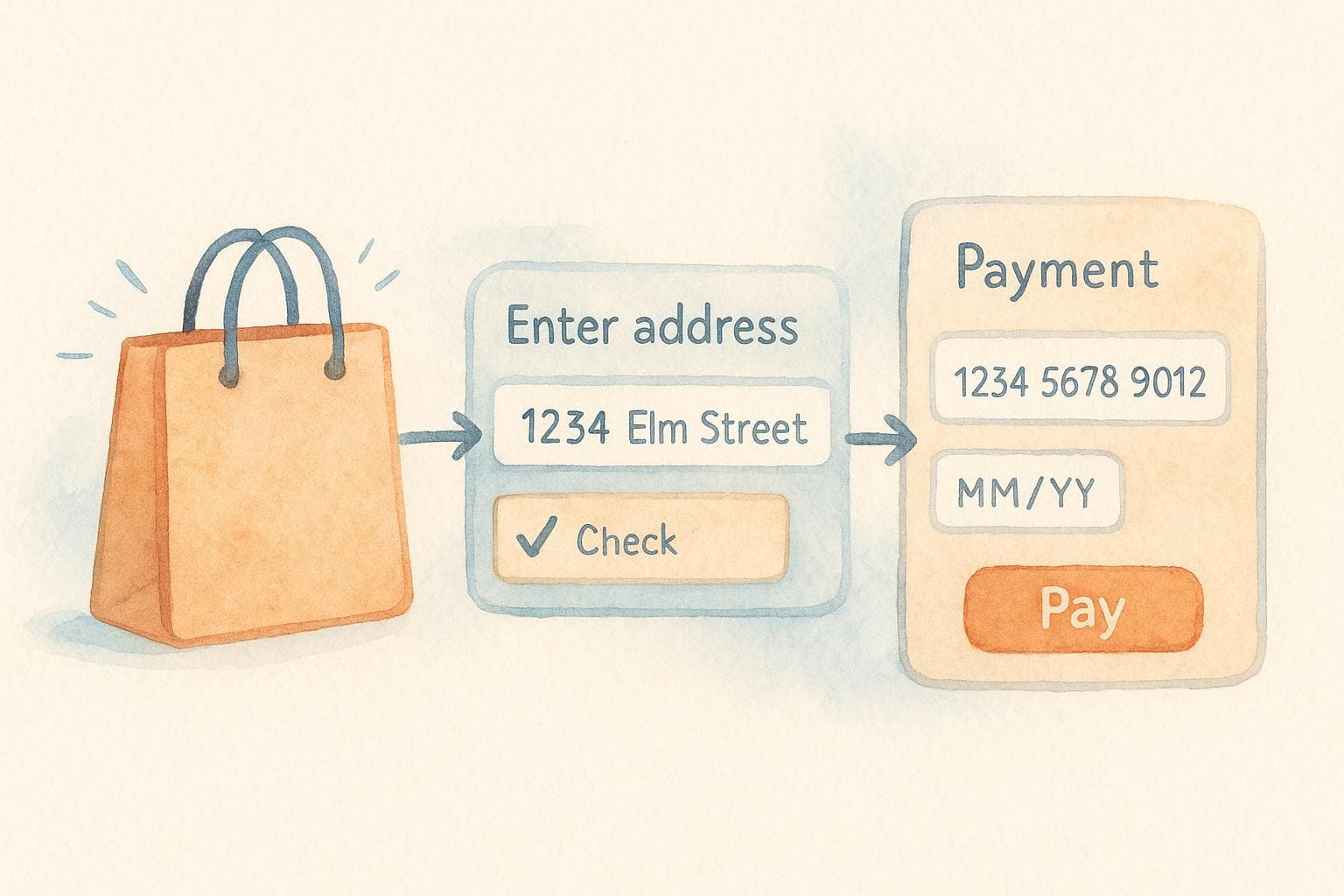
- Checkout Optimization: Guiding the user to the transaction
- The Business Challenge: Identifying the Problem
- Root Cause Analysis: Finding Performance Bottlenecks
- Solutions Implemented: How Checkout Speed Was Improved
- Results: Measuring the Impact
- Key Learnings and Takeaways
- Conclusion: Growing Your Business Through Faster Checkout
- FAQs
Checkout speed directly impacts your sales. A 2-second delay can reduce conversions by 60%, and for Australian businesses, a 1-second delay may cost up to $70,000 per month in lost revenue. This article explores how MEGABAD, an Australian eCommerce retailer, increased their checkout conversion rate from 40% to 92% by addressing technical issues, simplifying the user experience, and optimising mobile performance.
Key Insights:
- Slow checkouts hurt sales and reputation: Delayed buttons, complex forms, and slow-loading pages frustrate customers.
- Mobile users are especially impacted: Poor optimisation leads to higher cart abandonment.
- Simple fixes drive results: MEGABAD's changes, like fixing a delayed "Buy" button (+73% conversions) and adding address autocomplete (+23%), boosted their revenue by millions annually.
- Testing is critical: A/B tests and session replays revealed hidden issues and validated solutions.
Quick Wins for Faster Checkouts:
- Fix delayed buttons or slow scripts.
- Add local payment options like Afterpay or Zip.
- Simplify forms - reduce fields and use address autocomplete.
- Optimise for mobile with smaller images and single-page layouts.
Checkout speed isn’t just about tech - it’s about creating a smoother, frustration-free experience that keeps customers coming back. Let’s dive into how MEGABAD and others achieved measurable results through focused changes.
Checkout Optimization: Guiding the user to the transaction
The Business Challenge: Identifying the Problem
In 2024, MEGABAD, an Australian eCommerce retailer specialising in bathroom equipment, encountered a pressing issue. While their website traffic remained steady and their product range was competitive, their traditional checkout process was underperforming. The conversion rate for this flow was less than 40%, whereas their express checkout option achieved an impressive 92% conversion rate. This glaring difference pointed to unseen obstacles in the standard checkout experience.
The financial implications were substantial. With an average order value of approximately $350 AUD - a common price for bathroom fixtures - abandoned carts were costing significant revenue. To illustrate, if 1,000 checkout attempts occurred each month, the disparity between a 40% and 92% conversion rate could result in an estimated monthly loss of $182,000 AUD. Over a year, this added up to over $2 million AUD in missed revenue.
Customer feedback highlighted issues like slow-loading pages and freezing screens, but the root causes remained unclear. By leveraging session replay tools, MEGABAD uncovered critical insights. Customers frequently clicked the "Buy" button, only to abandon their purchase when the button - delayed by a personalisation tool - failed to load promptly. Additionally, their address validation system was mistakenly rejecting orders from buyers purchasing for properties under construction, blocking legitimate sales. These issues were not unique to MEGABAD; they reflected broader challenges in the eCommerce space.
A similar story unfolded at Speedway Motors, an automotive eCommerce retailer. Despite growing web traffic, their conversion rates were dropping. Their checkout process required customers to manually input street, city, state, and postcode into separate fields - a cumbersome task, particularly on mobile devices. This led to mobile users abandoning their carts at rates 30–40% higher than desktop users.
For Australian eCommerce businesses, these challenges are magnified by high customer expectations. Shoppers demand seamless, hassle-free experiences, similar to those offered by major international and well-established local platforms. When checkout processes feel slow or clunky, customers quickly move on to competitors.
The data confirmed the urgency of these concerns. Establishing clear baseline metrics became essential - not just conversion rates, but also page load times, time spent on each step of the checkout process, and pinpointing exact drop-off points. MEGABAD discovered their checkout page loaded slower than their product pages, while Speedway Motors identified mobile-specific friction in address entry.
Uncovering these hidden pain points was the first step toward making meaningful improvements. By addressing these issues, businesses could begin to close the gap between customer expectations and their actual experience.
Root Cause Analysis: Finding Performance Bottlenecks
Identifying checkout issues was just the beginning. A closer look revealed both technical hiccups and user experience challenges that were turning customers away, despite surface-level metrics only pointing to low conversion rates.
Technical Issues Found
Session replays provided a critical clue: a personalisation tool was delaying the appearance of the "Buy" button. Customers, thinking it was unresponsive, clicked repeatedly before abandoning their purchase.
Monitoring tools painted an even clearer picture. The checkout page was significantly slower than product pages, with waterfall charts from developer tools pinpointing third-party scripts as the main culprits. These scripts were dragging down load times and frustrating users.
Payment gateway integrations added another layer of complexity. Multiple API calls for payment verification and fraud detection were creating latency. By measuring the Time to First Byte (TTFB) during high-traffic events like Boxing Day or Click Frenzy, the team confirmed that these delays were particularly problematic during peak shopping periods.
Further technical audits uncovered issues with server response times and inefficient database queries. During busy periods, the system struggled to handle simultaneous checkouts, a problem revealed by analysing the 95th percentile response times. For instance, Rakuten24, a Japanese eCommerce retailer, showed how improving Core Web Vitals could increase revenue per visitor by 53.37% and boost conversion rates by 33.13%. This example highlights the direct link between performance improvements and revenue growth.
These technical problems weren’t just backend headaches - they were directly tied to customer frustrations. But the story didn’t end there; user experience issues were also driving abandonment.
User Experience Problems
Some usability issues were more subtle but equally damaging. MEGABAD’s address validation system refused orders with new or unconventional addresses, effectively locking out customers building or renovating homes.
Speedway Motors faced a different obstacle. Their checkout process required customers to manually fill in separate fields for street, city, state, and postcode. This was especially tedious on mobile devices, where the cumbersome interface led to much higher abandonment rates compared to desktop users.
Form analytics tools shed light on specific pain points. Drop-off rates spiked at certain fields, and heatmaps revealed confusion over elements that appeared interactive but weren’t. Funnel analysis confirmed that simplifying the checkout process and reducing steps eased these frustrations significantly.
Mobile optimisation also proved to be a major issue. Customers in regional areas, often dealing with slower network speeds, faced even worse experiences. Oversized images, poorly optimised CSS and JavaScript, and touch targets that were too small made mobile interactions a struggle. The team prioritised testing on actual mobile devices and networks to better reflect real-world conditions, rather than relying on resized desktop browsers.
Solutions Implemented: How Checkout Speed Was Improved
After pinpointing the issues, the team focused on specific solutions to streamline the checkout process. These efforts were grouped into three main areas: technical fixes, user experience improvements, and rigorous testing to ensure the changes delivered results.
Technical Improvements
The first step was addressing the lagging "Buy" button, which had caused significant frustration. MEGABAD resolved this by moving the button's functionality directly onto their eCommerce platform, eliminating reliance on a third-party personalisation tool that had introduced delays. This adjustment alone cut drop-off rates by 30% and boosted conversion rates by 73%. The takeaway? Critical checkout elements should always be native to the platform to avoid external delays.
Next, the team optimised images on checkout pages. By compressing product images - keeping thumbnails under 50KB and detail images under 150KB - and using WebP formats, file sizes were reduced by 30–35% without sacrificing quality. For Australian customers, particularly those on 4G networks in regional areas, this was a game-changer. Every 100KB of images had previously added 0.5–1 second to load times.
Payment processing also saw a major overhaul. MEGABAD replaced their outdated payment gateway with a faster alternative, cutting transaction times from 4–6 seconds to just 1–2 seconds. This upgrade improved checkout speed by 15–25%. They also introduced popular Australian payment options like Afterpay and Zip, addressing a gap that had been costing them sales. Adding a missing payment method for one country alone led to a 17% increase in conversions.
Server-side optimisation was another priority. The team implemented strategic caching: browser caching for static assets like CSS and JavaScript was set to 30–90 days, while server-side caching for product data refreshed every 1–24 hours. Database queries were streamlined from 20–40 calls per checkout session to just 5–10. For Australian users, adding regional caching nodes in Sydney and Melbourne reduced latency by 25–35%.
These technical upgrades reduced overall checkout times from 2–3 minutes to just 45–90 seconds, cutting cart abandonment rates by 15–25%.
Simplifying User Experience
Technical fixes were vital, but simplifying the checkout process itself was equally important. One major improvement was introducing guest checkout, which removed the need for mandatory account creation. This change alone increased completion rates by 20–30%, as it eliminated a major source of friction.
Address entry was another pain point that required attention. Speedway Motors implemented an address autocomplete tool that allowed users to find their correct address with just 3–5 characters, removing the need for separate city, state, and postcode fields. This was especially helpful for mobile users, where manual entry had been a common cause of abandonment. The result? Higher conversion rates and fewer misdelivered packages, which also reduced shipping costs.
MEGABAD tackled their address validation issues by making their system more flexible. Previously, customers with properties under construction or unconventional addresses faced order rejections. By accommodating these edge cases, they achieved a 23% increase in conversion rates. Their optimised fast checkout process now boasts a conversion rate of around 92%, compared to less than 40% before the changes.
Another business simplified its checkout by moving from a three-page format to a single-page layout. This change doubled mobile checkout speeds, increased conversion rates by 37%, and boosted average order value by 26%. The single-page design reduced customer frustration and made the process feel more intuitive.
Returning customers also benefited from streamlined processes. WP Bakery introduced one-click checkout with pre-filled payment details, leading to a 38% rise in conversion rates for repeat buyers.
To further simplify the experience, the team reduced form fields to the essentials: name, email, phone number, delivery address, and payment details. Optional fields like company name or delivery instructions were moved to expandable sections. Testing showed that reducing visible fields from 15–20 to just 6–8 boosted checkout completion rates by 20–35%, without compromising order fulfilment.
Testing and Refinement
To ensure these improvements delivered real results, the team relied on data-driven testing. Baseline metrics like checkout completion time, abandonment rates, and conversion rates were established to measure progress.
A/B testing was conducted methodically, with one variable tested at a time. For example, payment gateway changes were tested separately from form field reductions. Each test ran for 2–4 weeks to account for variations in traffic and customer behaviour, with results validated at a 95% confidence level.
The Clean Program demonstrated the power of iterative testing. With 125,000 monthly visitors and a 60% initial conversion rate, they experimented with a three-tabbed checkout layout featuring interactive cues. This approach led to a 16% increase in conversions.
Session replay tools and heatmaps provided critical insights during testing. These tools revealed confusing elements and pinpointed where users abandoned the process. This data-driven approach ensured that decisions were based on actual user behaviour, not assumptions.
Secondary metrics like customer satisfaction, support ticket volume, and payment failure rates were monitored to ensure that speed improvements didn’t create new issues. For Australian businesses, testing across different times and days was key, as traffic patterns varied.
Rakuten24's experience highlighted the impact of optimised performance. By focusing on Core Web Vitals, they achieved a 53.37% increase in revenue per visitor and a 33.13% rise in conversion rates. This underlined the strong connection between technical performance and business results.
Typically, the testing phase involved 3–5 sequential A/B tests over 8–12 weeks. Each test validated specific changes before moving on to the next optimisation. This structured approach reduced checkout times by 40–60% while maintaining or improving conversion rates. For MEGABAD, the cumulative impact of these efforts resulted in a 78% increase in conversion rates - a testament to the value of thorough testing and refinement.
Results: Measuring the Impact
After implementing the optimisations, the results were clear: faster checkouts directly translated to better business outcomes, proving the initial assessment and the solutions were spot on.
Performance Metrics
The data speaks for itself. MEGABAD's efforts led to a 78% overall increase in conversion rates, with their streamlined fast checkout achieving an impressive 92% conversion rate.
Breaking down the changes reveals the key drivers behind these results. Fixing the delayed "Buy" button alone resulted in a 73% jump in conversion rates and a 30% drop in abandonment rates. Simplified address validation added another 23% boost, and introducing a previously missing payment method delivered a further 17% increase in the affected market.
Other businesses saw similarly strong outcomes. Rakuten24's work on Core Web Vitals led to a 53.37% rise in revenue per visitor and a 33.13% increase in conversion rates. Transitioning from a three-page checkout to a single-page process boosted conversion rates by 37%, doubled mobile speeds, and increased the average order value by 26%. WP Bakery's one-click checkout for returning customers resulted in a 38% improvement in conversion rates. Meanwhile, The Clean Program's redesigned checkout with interactive prompts saw a 16% increase in conversions.
| Business | Primary Optimisation | Conversion Rate Improvement | Key Additional Benefit |
|---|---|---|---|
| MEGABAD | Multiple improvements | +78% overall | Fast checkout: ~92% conversion |
| Rakuten24 | Core Web Vitals | +33.13% | +53.37% revenue per visitor |
| Unnamed business | One-page checkout | +37% | +26% average order value |
| WP Bakery | One-click checkout | +38% | Streamlined repeat purchases |
| The Clean Program | Interactive checkout redesign | +16% | Enhanced user guidance |
Speedway Motors also saw strong results by adding address autocomplete. This not only improved conversion rates but also reduced the number of misdelivered or returned packages, saving on unexpected shipping costs. For Australian businesses, particularly those dealing with complicated regional addresses, such improvements are especially valuable.
These changes didn’t just boost metrics - they also reshaped the overall customer experience.
Customer Impact
The performance improvements translated into real benefits for customers, making the checkout process faster, smoother, and more reliable. This reduced frustration and helped build trust, encouraging repeat purchases.
WP Bakery's one-click checkout, for example, simplified repeat orders by using pre-filled payment details and saved addresses. Mobile users saw major gains too. The switch to a single-page checkout doubled mobile speeds, making it much easier for shoppers on 4G networks in Australia to complete their purchases.
Customer support teams also felt the difference. MEGABAD’s fix to address validation issues eliminated complaints about rejected orders. Similarly, Speedway Motors’ improved address verification reduced delivery errors, saving time and resources that would otherwise be spent resolving these problems.
For Australian shoppers, the inclusion of local payment options like Afterpay and Zip played a big role in reducing cart abandonment. These methods allowed customers to pay in ways they were most comfortable with.
All these changes added up to a better shopping experience. Customers who might have previously abandoned their carts due to slow checkouts or confusing forms were now able to complete their purchases with ease. This led to higher satisfaction, better reviews, and more word-of-mouth recommendations - critical for building trust and loyalty in Australia's competitive eCommerce landscape.
Key Learnings and Takeaways
Improving checkout processes offers two major benefits: quick wins from technical fixes and long-term advantages from enhancing the user experience.
Take MEGABAD, for example. Their 78% boost in conversion rates wasn’t due to a single tweak. Instead, it came from addressing multiple friction points: fixing a delayed button (+73%), simplifying address validation (+23%), and adding missing payment methods (+17%). Each change tackled a specific issue, and together, they transformed the overall checkout experience.
The lesson here? Checkout optimisation isn’t about finding one magic fix. It’s about systematically identifying pain points, testing solutions, and measuring results. Businesses like Rakuten24, which saw a 53.37% increase in revenue per visitor, achieved this by treating checkout speed as an ongoing priority rather than a one-time project.
Practical Recommendations for eCommerce Businesses
To get started, conduct a thorough checkout audit to identify where customers drop off. Tools like session replays can uncover hidden issues that raw data might not reveal, such as unresponsive buttons or confusing form fields.
Focus on quick wins first - changes that require minimal effort but deliver noticeable results. Adding payment options or simplifying forms can often be done in days and still boost conversion rates by 10–15%. These small victories can help build momentum for larger initiatives.
For Australian retailers, mobile optimisation is key. With 60–70% of eCommerce traffic coming from mobile devices, your checkout process must work seamlessly on smaller screens. Don’t forget to include local payment options like Afterpay and Zip to cater to customer preferences.
Address validation is another critical area, especially in Australia. Challenges like rural addresses and properties under construction require a balance: validate to avoid delivery errors, but don’t reject legitimate orders unnecessarily.
When testing changes, focus on one high-impact adjustment at a time - payment methods, trust signals, or form requirements - and run tests for 2–4 weeks with at least 100 conversions per variation to ensure reliable results.
Finally, treat checkout optimisation as an ongoing effort. Set up weekly dashboards to track key metrics like load times, conversion rates, and abandonment rates. Configure alerts to flag significant changes, such as a 20% increase in load time or a 5% drop in conversions, so you can respond quickly.
Security should be invisible to users. Use tokenisation and encryption to protect sensitive data while displaying trust signals like SSL certificates and security badges. Research shows that unexpected security requirements cause 64% of Australians to abandon their carts. Make sure your security measures don’t become a barrier to checkout.
For returning customers, simplicity is king. WP Bakery’s one-click checkout with pre-filled payment details boosted conversion rates by 38%.
How This Connects to eCommerce Growth
A faster checkout process doesn’t just improve customer satisfaction - it directly impacts your bottom line. A 1-second improvement in checkout speed can increase conversion rates by 7%, which translates into significant revenue gains across thousands of transactions. For Australian retailers, this means better returns on marketing spend and a reduced cost per acquisition.
The benefits go beyond conversions. Speedway Motors, for instance, reduced misdelivered packages and unexpected shipping costs through better address validation. Similarly, MEGABAD resolved customer complaints about rejected orders. These operational efficiencies free up resources, allowing businesses to focus on growth instead of troubleshooting.
Faster checkouts also enhance infrastructure efficiency. By reducing server load, businesses can handle traffic spikes during peak periods like Black Friday, Boxing Day, or end-of-financial-year sales - without expensive upgrades.
A smooth checkout experience encourages word-of-mouth referrals and positive reviews, reducing reliance on paid advertising. Happy customers are more likely to recommend your business and return for future purchases, increasing customer lifetime value - a cornerstone of sustainable eCommerce growth.
An optimised checkout process scales easily. Businesses expanding into new markets or product categories can confidently deploy a proven system that converts effectively.
For those with limited resources, focus on changes that deliver the most impact for the least effort:
| Optimisation Strategy | Conversion Rate Impact | Implementation Complexity |
|---|---|---|
| Fixing technical delays (button loading) | +73% | Low |
| Adding missing payment methods | +17% | Low |
| Simplifying account creation requirements | +30% (drop-off reduction) | Low |
| Address autocomplete/validation | +23% | Medium |
| Page speed optimisation | +66% | Medium |
| One-click checkout for returning customers | +38% | Medium |
| Brand-consistent design with visual cues | +16% | Medium |
Sustained growth comes from treating checkout optimisation as part of a broader strategy. Align improvements with 6–18 month business goals, and follow a structured approach: audit, prioritise, implement, measure, and refine. This method builds long-term advantages, making checkout speed a powerful driver of business success.
Conclusion: Growing Your Business Through Faster Checkout
Real-world examples highlight how improving checkout speed can significantly boost revenue. Take MEGABAD, for instance - they saw a 78% jump in conversion rates simply by addressing key checkout issues. Similarly, Rakuten24 increased revenue per visitor by 53.37%, proving that targeted performance improvements can have a direct and measurable impact on the bottom line. These results show that optimising the checkout process isn’t just a one-time fix - it's an ongoing opportunity for growth.
Continuous improvement in checkout processes delivers consistent results. Enhancements like better address validation or one-click checkout illustrate how reducing friction points can lead to smoother customer experiences and higher sales. These gains are rooted in identifying specific pain points and experimenting with targeted solutions.
For Australian eCommerce businesses, where mobile shopping is prevalent, even small checkout improvements can lead to big wins. High-impact fixes - like resolving a slow-loading button that caused cart abandonment or adding address autocomplete to simplify mobile transactions - deliver quick and meaningful results. The key is to rely on data, not assumptions, when making changes. Begin with a thorough audit, focus on adjustments that yield immediate benefits, and use those successes to fuel larger initiatives.
Your checkout process deserves as much attention as your marketing and product development efforts. Regular audits help identify revenue-draining issues before they escalate. Start by reviewing actual customer sessions to pinpoint struggles, compare your performance to industry benchmarks, and implement changes incrementally to measure their effectiveness.
For Australian eCommerce retailers, a faster checkout isn't just a nice-to-have - it’s an essential investment for staying competitive. A streamlined checkout process improves conversions, cuts operational costs, and enhances customer loyalty.
If you’re ready to take a closer look at your own checkout process, consider collaborating with experts who understand the unique challenges of the Australian eCommerce market. Uncommon Insights specialises in helping FMCG and eCommerce businesses develop data-driven strategies, including checkout optimisation, to drive measurable growth in conversions and revenue.
FAQs
What steps can eCommerce businesses take to identify and fix hidden technical issues slowing down their checkout process?
To tackle hidden technical issues that could be slowing down your checkout process, start with a thorough website audit. This involves diving into page load times, evaluating server response speeds, and observing how users interact during checkout.
Here’s where to focus your efforts:
- Leverage diagnostic tools: Use performance monitoring software to uncover bottlenecks like sluggish scripts or oversized images that drag down speed.
- Test on various devices and browsers: Ensure the checkout process is smooth and free of compatibility hiccups across different platforms.
- Examine third-party integrations: Check that payment gateways and other external tools are optimised and not causing unnecessary delays.
Once you've identified the problem areas, focus on fixing the issues that will have the greatest impact on both user experience and conversion rates. Keep testing and fine-tuning regularly to ensure your checkout process stays quick and hassle-free for your customers.
What are some simple and affordable ways Australian eCommerce retailers can enhance mobile checkout experiences?
Improving the mobile checkout experience doesn’t have to be a daunting or costly task. Start by making the process simple and user-friendly. Cut down on unnecessary steps, and ensure buttons and forms are easy to navigate on smaller screens - no one likes struggling to tap a tiny button on their phone.
It’s also essential to provide varied payment options. Include choices like PayPal, credit cards, and Buy Now, Pay Later services that are popular in Australia. Giving customers flexibility at checkout can go a long way in preventing abandoned carts.
Lastly, pay close attention to your site’s loading speed on mobile devices. Compress large images, stick to a mobile-friendly design, and test the checkout process regularly. A fast, glitch-free experience keeps customers happy and more likely to complete their purchase.
How does faster checkout speed enhance customer satisfaction and drive long-term business growth?
Improving checkout speed plays a big role in keeping customers happy and driving business growth. When the checkout process is quick and hassle-free, it cuts down on frustration and reduces the chances of customers abandoning their carts. This makes it easier for shoppers to complete their purchases, leaving them with a positive experience that encourages them to come back and shop again. Over time, this builds loyalty to your brand.
A faster checkout doesn’t just make customers happy - it can also boost revenue and retention. When people are satisfied with their shopping experience, they’re more likely to spread the word, sharing recommendations and leaving glowing reviews. On top of that, a streamlined checkout process can enhance operational efficiency, creating a win-win for both your customers and your business’s bottom line.
Related Blog Posts
Funnel Bottlenecks: Causes and Solutions
How Website Speed Impacts Ecommerce Sales
Shopify conversion rate optimization checklist
How to Map DTC Customer Touchpoints
How to Minimize Form Fields Without Losing Data
5 Ways to Reduce Cart Abandonment Rate in 2025
Newsletter
The Uncommon Insights Letter
Practical FMCG & eCommerce growth playbooks — margins, retention and scaling tactics, straight to your inbox.
Turn these ideas into profit you can see
Get a hands-on operator to turn the frameworks above into results — book a free audit call.